 Alex Aldridge has been working hard to harness the powerful
force that Legal Cheek has become. Since he founded the site nearly six years
ago from his flat in a Hackney tower block, it has developed from an irreverent
and at times rather wild and chaotic legal news blog to become an online
community of law students, trainees and junior lawyers with a massive social
media following, four full-time employees and an office in London’s trendy Dalston.
It’s not always easy to classify. News is still the central part of what Legal
Cheek does, but it’s also now well known for careers advice, training contract
and pupillage rankings and student events.
Alex Aldridge has been working hard to harness the powerful
force that Legal Cheek has become. Since he founded the site nearly six years
ago from his flat in a Hackney tower block, it has developed from an irreverent
and at times rather wild and chaotic legal news blog to become an online
community of law students, trainees and junior lawyers with a massive social
media following, four full-time employees and an office in London’s trendy Dalston.
It’s not always easy to classify. News is still the central part of what Legal
Cheek does, but it’s also now well known for careers advice, training contract
and pupillage rankings and student events.
As it has grown, the tone has changed ... not least because Alex
doesn’t write it any more, having moved over to focus full-time on the
commercial side. These days the editorial part of the site is run by news
editor Tom Connelly, 29, and features editor Katie King, just 23, with support
from junior reporter Natalie Kaminski, also 23. “It’s legal journalism for
millennials written and edited by millennials,” says Alex, now a veteran at 39.
For its readers, 60% of whom are law students, many of them
undergraduates, Legal Cheek is often the only legal news source they know, with
many having discovered it through friends sharing its news stories and memes on
their Facebook feeds. This means it has become relied upon to be a trusted
source of news and information about the legal profession. The response of the
Legal Cheek team has been to focus on establishing the blog as a credible,
officially verified reliable source of news, whilst at the same time making
sure the “colour” of its news is just as vivid. Alex, who has 12 years of
experience as a journalist, writing for titles including The Times, The Guardian and Legal Week before he launched Legal Cheek, has worked hard to pass on the old media professionalism
he learnt to his new editors. And to underline his establishment credentials, he
has made sure to secure external verification of these high journalistic
standards that he works to. Legal Cheek is one of the few legal news
outlets whose Twitter feed carries the "blue verified" badge. This is a
big deal and hard to achieve, signifying that the account is of public
interest. The blog itself is also listed as a verified Google news
publisher and is regularly cited in the national press ... most recently with two
name-checks in two weeks in The Spectator. And of course the hiring of Joshua Rozenberg
as a regular columnist was a big step in underscoring the blog’s establishment
credentials. “Yes we still go out on a limb on many stories. This
is what Legal Cheek is all about”, Alex tells me, “But the point is we are very
very sure of our facts when we do, so people can trust what we publish”. Clever
man.
“A good example”, he tells me, “was the story we ran at the time
KWM was going into administration. We knew that a number of City firms were clubbing together to make sure existing KWM trainees would all be looked after. The editors were extremely confident of their source and checked
all their facts carefully, so we ran the story when nobody else did. Then
on publication, we experienced a backlash; trainees were nervous and in some
cases sceptical that they would be saved. But we stood our ground and we
didn’t buckle, because we knew our source was watertight. Within two
weeks all trainees had been reassigned thanks to this rescue package from the
City firms and our story was vindicated. Then the traditional publications
followed with their versions of the story.”
Given Legal Cheek is more geared to social media than any other
legal news outlet, (Facebook being its main distribution channel, alongside
Google), and given Alex is so OCD about faithful reporting, I thought he
would be the perfect person to ask about the new phenomenon of "FakeNews". Here’s what he had to say:
“The term Fake News is used to apply to many different scenarios,
and it suits some protagonists to confuse them”, he told me. “The
original meaning stems from dubious propaganda activity at the time of the US
election and the rise of Trump: the dissemination of deliberately inaccurate
information from dedicated fake news sites, largely in Eastern Europe, designed
to mislead low-IQ audiences (eg some voters) who don’t have the wherewithal to
question what’s being fed to them.
“However, since then, the term Fake News has also been
commandeered and misused by all sorts of people to cast aspersions on perfectly
dependable news sources. Indeed the term first broke into the mainstream
(rather than being a discussion point for media insiders) when Trump himself turned the tables at his first press conference as President-elect, and used
the term to vilify Jim Acosta from CNN because he didn’t like his line of
questioning. We’ve also seen the YouTube video: "You are fake news!" he
proclaims, while ignoring the journalist’s question.
“But the term has also been used by the mainstream media
establishment to undermine public trust in newer, more social news sources,
such as Buzzfeed and so forth. It suits some traditional news
organisations to push out a message of “come to our trusted brand”, suggesting
that their long-established “pedigree” means their news coverage is by
definition more reliable. But this belies the fact that many of the new
internet news outlets are staffed to the hilt with classically trained
journalists, with long career pedigrees from exactly those publications that
like to look down their noses at the hip new contenders. These journalists
continue to work to the same high standards of faithful reporting and
journalist ethics at their trendy new homes.”
We have direct experience of what Alex is talking about here:
our friends at Buzzfeed are a classic example: numerous ex-broadsheet
journalists, (a previous assistant editor at the Sunday Times to name just
one), now pushing out stories on social platforms, but still working to the
same strict journalist codes they always have.
And as for Legal Cheek, however it develops in the future, it’s
reassuring to learn that although its stories are often challenging, and may even
occasionally offend, we never have to worry that they’re fake.
***
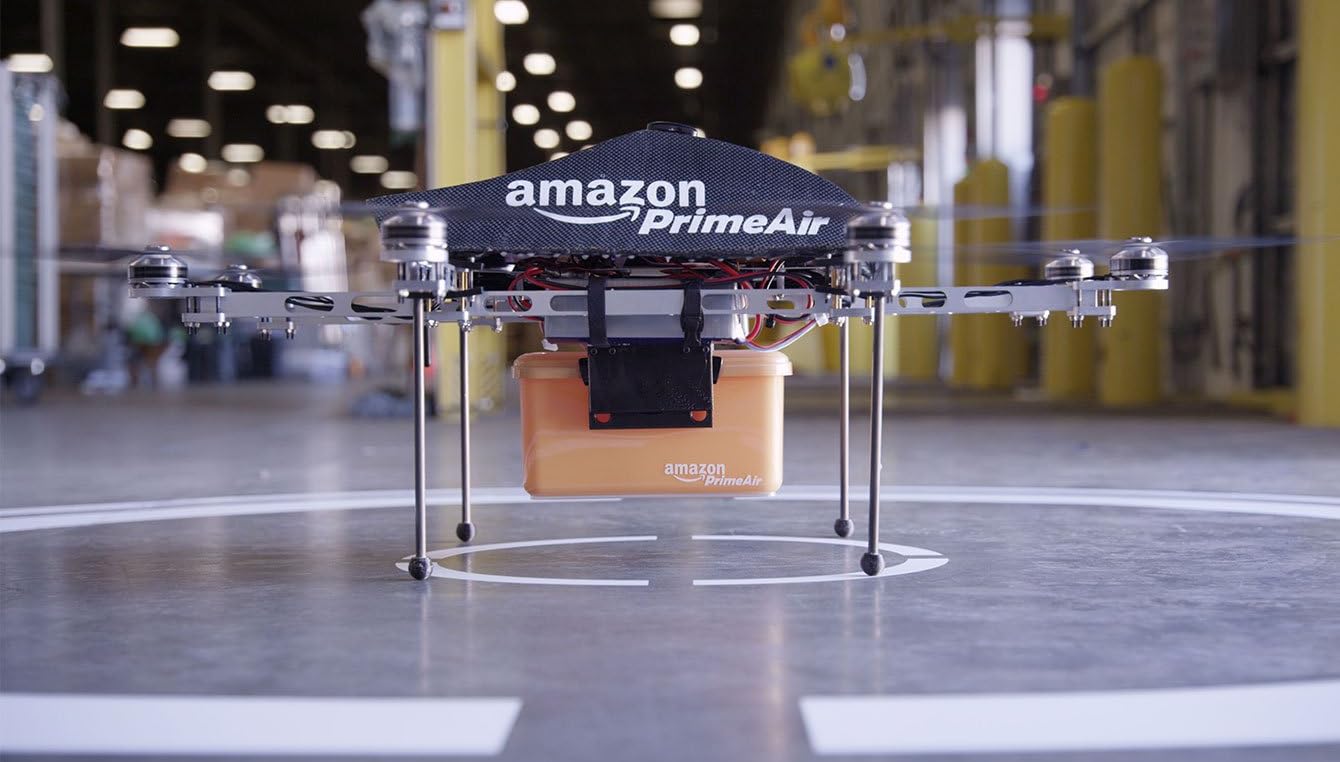 So how long before my Amazon
delivery is brought to me by drone? The alarm caused by the drone near Gatwick airport at the weekend, which forced a runway to close and delayed flights,
just serves to highlight the need for regulation to catch up with how mainstream
this new technology has become. You can buy drones on the high street now (and
on Amazon too of course), for as cheap as 20 or 30 pounds.
So how long before my Amazon
delivery is brought to me by drone? The alarm caused by the drone near Gatwick airport at the weekend, which forced a runway to close and delayed flights,
just serves to highlight the need for regulation to catch up with how mainstream
this new technology has become. You can buy drones on the high street now (and
on Amazon too of course), for as cheap as 20 or 30 pounds.
So are we afraid of the future we are headed towards, where our lives
are taken over by robots? If you want some reassurance, you might find some
comfort in this piece earlier this year on the World Economic Forum website by Rutger Bregman, journalist and author of Utopia for Realists. Entitled "A growing number of people think their job is useless. Time to rethink the meaning of work", the article expounds Bregman's view that robots taking over our jobs is a good thing ... if we only adjust how we look at work and life. As he puts it: "jobs are for robots and life is for people". It's thought provoking stuff...
***
 The sad news of the passing of the
creator of Paddington Bear was actually most uplifting. News reports of Michael Bond's death at the ripe old age of 91 reminded us that the central message of
this much-loved tale is one of kindness, decency and tolerance ... and of
opening arms to welcome a refugee. Relevant today more than ever.
The sad news of the passing of the
creator of Paddington Bear was actually most uplifting. News reports of Michael Bond's death at the ripe old age of 91 reminded us that the central message of
this much-loved tale is one of kindness, decency and tolerance ... and of
opening arms to welcome a refugee. Relevant today more than ever.
***
So how long before my Amazon
delivery is brought to me by drone? The alarm caused by the drone near Gatwick airport at the weekend, which forced a runway to close and delayed flights,
just serves to highlight the need for regulation to catch up with how mainstream
this new technology has become. You can buy drones on the high street now (and
on Amazon too of course), for as cheap as 20 or 30 pounds.***

For all the chaos Paddington
creates around him, he remains faultlessly polite and kind. As fellow author Michael Morpurgo said in the Guardian, Paddington "reflects the best of
us: we all get into scrapes, and through his innocence and kindness he relates
to everyone."
It's wonderful when you think of
it, that the appeal of this story about a WW2 refugee has endured so long and
spread so wide: 30 million copies sold worldwide in 30 different languages. A
tale of kindness to refugees we would all do well to remember. And definitely
one of the better narratives in children's literature to come out of the 1950s.
I for one will be giving the
bronze statue of this loveable bear at Paddington station a daily wave as I
walk past on my commute. Goodbye Mr Bond. And Thank You.


No comments:
Post a Comment