Wednesday, 29 April 2015

Kristina Oliver


Many firms like to say they "do things differently" but how many are as brave as Keystone Law? I recently had the pleasure of lunch with Kristina Oliver. We hadn't caught up properly since working together at Cripps over 10 years ago, (apart from brief chats bumping in to one another at legal awards ceremonies over the years). What a delight! 

Back in 2003, Kristina was in her first legal marketing role, but already you could see she was going places. 10+ years on and her pedigree is impressive. Keystone Law is her fourth law firm role and the list of her awards nominations and wins is outstanding (Legal Marketing Team of the Year, Best Use of Thought Leadership, Marketing Campaign of the Year... it goes on and on...) And she hasn't been putting her feet up outside of work either: in her spare time (yes - this woman wins awards in her day job and still has spare time!) she set up and ran her own business, organising events in Ibiza for the dedicated clubbing community and putting out dance CDs that topped the clubbing charts. Hard Dance Ibiza was so successful, particularly in its deft use of social media to promote its events and products, that a major tour operator (Thomas Cook, no less) hired her to bring their own social media marketing up to scratch. I told you she was impressive.

Now, you wouldn't think these two very different strands of professional services and extreme clubbing would be that complementary would you? But the story goes it was precisely this unusual combination that made Kristina the perfect candidate for the Head of Marketing role at Keystone Law: "Keystone were specifically looking for someone with an entrepreneurial background, at the same time as a classic legal marketing skill-set and I guess I fitted the bill. That in itself made Keystone Law a very attractive employer for me; how many law firms really want to let their marketing teams get creative? I guess I've been lucky with the firms I've worked for in my 12 years of professional services marketing, but I've heard so many stories from friends and peers how the job is so easily reduced to an administrative one, ordering brochures, organising events but always preserving the status quo and absolutely not about doing anything differently ... unless a competitor firm has done it first and then boom! suddenly the partners are all putting pressure on the marketing team to replicate this original and unique idea." This is a theme all too familiar: the "Me Too" school of marketing. Whatever happened to "differentiation" in the marketplace and understanding your "unique selling points"? I should point out that, like Kristina, we are the lucky ones at Kysen, in that the people who choose to work with us will be the ones keen to stand out and innovate.  But from the sidelines we often see this copycat instinct elsewhere.

In contrast, Kristina can't speak highly enough of her own firm and what a breath of fresh air it is to be free to get creative.  Indeed to be expected to be.  "There are so many things I love about this role.  We really are doing things in a fundamentally different way. Our whole "dispersed law firm" model is about setting lawyers free to focus on what they love and do best, ie lawyering and looking after clients."  [I love their slogan "Law Set Free: Practise what you love at Keystone Law".] "The admin and marketing is all handed over to the central management team. And, crucially, partnership politics is parked well outside the door. But the model brings with it some interesting internal communications challenges, and this is the part of my job I find most fascinating.  With 160 lawyers based in over 70 towns spanning England (and a number located abroad including the Keypoint Law team in Australia), how do you create a cohesive culture?  How do you make people feel they belong?  

"We often say that in many ways we operate like a traditional law firm, just one with very long corridors between our lawyers' offices.... for example the M4. Well this is precisely where social media tools and internal communications campaigns come into their own.  Our intranet has a much more "social media" look & feel to it than you would expect of a law firm, and our lawyers respond really well to it.  This format is perfect for making them feel they belong to a community.  And we find fun ways to bond as a team too.  So for example on Red Nose Day this March, we gave the Keystone website a makeover: our 150 lawyers all agreed to let us photo-shop their profile pictures adding bright red noses to their faces.  We offered a £1 donation for every client or other visitor clicking through. It generated so much goodwill internally, let alone externally, and bonded everyone together in the fun of it all. The press got behind our campaign as well, particularly The Lawyer, tweeting links to the campaign and encouraging as many people as possible to click through.  In 24 hours we saw an incredible 1,760 percent increase in web traffic.  Even more surprising was that these visitors then spent an average 9 minutes looking at the website. A real success.  Not to mention the pounds we raised for charity." The press release for this stunt opened with the lines "As a firm we are never afraid of pushing the boundaries...".  They're not over-stating the case.

Keystone Law has recently launched a Law Set Free portal, targeting potential lawyers with messaging on how working for a dispersed organisation allows you to focus on what you love, and enticing you to try their lifestyle calculator; you're invited to answer a few simple questions to see an analysis of your time, and then with the click of one more button see how different your life could be at Keystone Law. And they have numerous other brilliantly fresh campaigns in the pipeline for you to watch and enjoy later in the year. 

This is definitely a space to watch.  And with Kristina leading the charge on the marketing front, it's going to be a space that's moving very fast. 
***
If ever you needed proof social media has come of age, the induction of Youtube stars "Zalfie" into Madame Tussaud's hall of fame is undoubtedly it. My head almost split in two on hearing this news, my mind struggling to fit the images of beauty vlogger Zoella and boyfriend blogger Alfie Deyes together with the very traditional roll-call of movie stars, sports celebs and historical figures we are more used to seeing at the house of wax. YouTube vlogging is clearly a mainstream pastime. As Tussaud's General Manager Ben Sweet said, "It reflects just how huge these YouTube stars are". (Zoe Sugg's fashion and beauty channel boasts 7.8 million subscribers, and Alfie Deyes' attracts 3.9 million.) The statues are of course to be unveiled some time later this year. We'll let you know nearer the time...
*** 
I just love the "I Am An Immigrant" campaign currently dominating poster sites across the UK, in the tube, at railway stations and on billboards the length and breadth of the country. Have you seen them? 

Telling personal stories in block headlines such as Baljeet Ghale's "I have taught English to over 2400 students and was the first black president of the NUT", and from our own circle, barrister S Chelvan of No5 Chambers' "For 13 years I have been championing human rights and fighting for justice", the campaign aims to "humanise and detoxify" the immigration debate. It's organised by the Movement Against Xenophobia and it's brilliantly done! And what's even better, it's financed by Crowdfunding. Restores your faith in human nature. 

You can read more about the campaign here.

Tuesday, 7 April 2015

Ray Berg


Curious to know the secret of Law Firm of the Year Osborne Clarke’s success?  Well, read on… I was lucky enough to be a guest of Managing Partner Ray Berg and his team at the Legal Business Awards in March and needless to say the emotion around the table was electric when the announcement came that they had won the evening’s top prize.  (I always consider the Law Firm of the Year accolade the equivalent of winning Best Picture at the Oscars.)

“I’d only been in the managing partner role for three days when the call came in from Legal Business to say we had been shortlisted, so I see this very much as a testament to all that my predecessor Simon Beswick” [now OC's International CEO] “achieved in the 12 years before I took up the leadership mantle.  And I guess I also see it as a clear marker in the ground for me, pinpointing where the journey starts as I step into the leadership role and take responsibility for guiding the firm into the future.”

The Osborne Clarke team flew in to London for the Legal Business Awards on the Tuesday, direct from their annual partners strategy weekend  which this year took place in Amsterdam. (Nice!)  So I couldn’t have picked a better time to be speaking to Ray about his reflections on Simon’s legacy and his own plans for the future.

“Simon will tell you that the secret of Osborne Clarke’s success is centred around embracing change.  Not just accepting change, and knowing you have to adapt.  But being positively excited about it and seeing it in terms of the opportunity it can bring, both corporately and individually.  The firm’s story over the past decade has been all about the decisive and darting moves we have made to improve  market position, nipping into gaps in the market that have opened up as tectonic plates shift.  When business life is static, you simply don’t have the same opportunities opening up.  It’s the movement that creates the new spaces and then it’s a matter of being bolder and quicker than competitors to jump ahead and make that land grab.

“10 years ago we were still essentially a Bristol and South West firm (albeit a regional leader) with ambitions to be taken seriously in the London market.  Thanks to Simon’s wise strategic vision, his sound management and his innate ability to bring everyone along with him in his thinking, today we are clearly recognised as one of the main, established players at the table UK wide.” [Indeed, the Law Firm of the Year award underlines this perfectly.]  “And not only have we come of age as a national firm, but we also have a serious international platform to take us into the future.”

“Also, it was Simon who guided the firm in developing its distinctive sector-orientation.  The Legal Business Award singled out our work on Smart Cities as a good example of our that approach: taking our deep understanding of the legal, regulatory and commercial imperatives in the sectors we work for, combining that with the current macro theme of urbanisation and knowing that you won't be able to build these smarter cities until digital business, finance, real estate, energy and transport all come together and buy in to that collective vision. If we get that right, then, for example, the UK can play a major role in helping India's Modi build the 100 smart cities he plans to create. Our campaign to date has been incredibly successful, in terms of developing our broader reputation, and in terms of bringing in new mandates. We believe that we're well placed to be at the heart of smart cities for years to come.”

And on that subject, what of the firm’s own future?  Simon Beswick is clearly going to be a very hard act to follow and I am agog to know how Ray sees his mission.“It’s about building on this incredibly strong platform and making sure we make the most of the opportunity to really go for what we want.  I need to be able to look back this time next year and know we made the most of our 12 months as Law Firm of the Year.  And that we made it count for something tangible.  For me there are three specific focus points:  first, being sensitive to what clients really want and need. Generally the answer is they want more for less!   And I firmly believe it’s our challenge to find innovative and creative ways of being able to deliver this for them.  Another part of Simon’s legacy is that he made the firm proud of its entrepreneurial roots and its associated  value-set, (so being confident in thinking differently, and come up with out-of-the-box solutions, be prepared to push boundaries, etc). And I think it’s important that we keep and cherish this part of our culture as we continue to grow bigger and become ever more part of the legal establishment; second, we need to be highly attuned to what the people in our business want too (Generation Y is very different from Generation X and all the other generations that have gone before, with a different expectation about work/life balance, flexibility in the workplace and “partnership” not being the same unquestioned career destination that it once was). The third focus point is of course being profitable, as this is what gives us stability and security… and provides the strong base we can all use as our jumping off points. 

“I want Osborne Clarke to be the law firm every business in our chosen marketplaces wants to be advised by, because of our famed client-centric approach and being so closely attuned to our clients’ needs; and I want Osborne Clarke to be the law firm that every other lawyer wants to work at, so we can attract the best talent in the marketplace and keep on moving from strength to strength."

Ray said to me:  this must be one of the few jobs in law firm management that anyone would like to have a go at.  “It’s a dream gig,” he says.  But Ray is the man who’s been chosen for the role and I for one can see that Osborne Clarke is extremely lucky for that.  Expect great things…
***
I don't know about you but personally I was transfixed by the TV leaders' debate. It was a new experience, hearing from seven different parties, each given the same amount of airtime. I had previously thought Cameron's insistence on inviting so many to take part rather odd, at best. Seeing them all in front of me, the penny dropped: in this age of coalition politics it's as important to know what the marginal parties stand for as the main ones as you never know who's going to be invited to share power. 

Fun poring over the polls after the debate too. Not just who had gained/lost in popularity, but which of the Magnificent Seven won in terms of the all-important "most new Twitter followers": Green Party leader Natalie Bennett. Cameron still leads by most followers over all, but the gaps are closing. We are certainly entering a new age in politics where the smaller parties are no longer necessarily on the margins. 

Who do you think came off best?
***
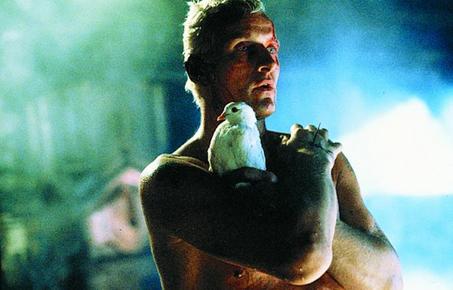
If you missed the news that Blade Runner is showing in a cinema near you, take note now! This 1980s masterpiece has been remastered and re-cut to celebrate its 30th anniversary, so now even closer to director Ridley Scott's vision. I've seen this film at least 10 times (with various different endings) but this weekend was my first opportunity to see it on a big screen. I love it when cinemas show these golden oldies, particularly because it's perfect for inducting my kids into the film world's best. No matter my 19 year old asked me five minutes in "so were these effects considered state-of-the-art when Blade Runner first came out?", I myself was blown away. 

Blade Runner is being screened across the country throughout April. Do be sure to catch it!

Sunday, 22 March 2015

Victoria Wright


As soon as I saw this year's Red Nose campaign theme, "Make Your Face Funny for Money" I felt for our friends at Changing Faces. They work so hard at changing public attitudes to facial disfigurement it must be so disheartening for them to see a fellow charity drop such an awful clanger (see the photo of the "pegged face" in particular). As regular readers of this blog will remember, Changing Faces are the people who created that brilliant film short "Leo" outing the disgraceful negative attitude most of us harbour towards disfigurement by pointing out how often facial scarring is used in film to signify a baddie. Click here to refresh your memory and see here for more information on their Face Equality on Film campaign.

As luck would have it, I had a coffee meeting with Changing Faces champion Victoria Wright already scheduled so I took the opportunity to ask for a reaction "It's something I faced in my daughter's playground when I started to take her to nursery two years ago. In their innocence, some of the children would come up to me, ask me about my face and ask if I'm a monster. They were confused about why I look the way I do. I thank the years of support and love I have had from my family and my husband, and the excellent coaching I've had from the Changing Faces team in how to deal with the outside world [the charity offers a wide range of support and mentoring for people and families dealing with disfigurement and the public's attitude toward it] that I'm able to skip lightly over my own feelings when these comments come and concentrate more on to the right way to respond for my daughter's sake (not to say that such comments don't hurt me: they do but I'm very experienced now in dealing with that!)"
So how did she respond? "I just looked them in the face kindly and said, "No I'm not a monster, sweetheart, I'm Emmy's mummy! I was born with a poorly face. It doesn't hurt, it just means I look a bit different" which they accepted immediately and then just ran off and continued with whatever they were doing before.  They soon accepted me and after a few months, would run up to me to tell me about their toys or to tell me that Emmy had been a cheeky girl that day!."


So what does she make of the Make Your Face Funny For Money campaign, I ask. "Well, my face has been funny for years and nobody gives me any money for it!  As you can tell, I do have a sense of humour about it, like anyone else. Pulling funny faces can be, well.... funny.  But I think it's images that mimics a particular facial disfigurement that it crosses the line, or gets close to it.  Facial palsy for example.  And I do think that companies should take note if someone with a disfigurement says that a particular image or product insults them, even if the offence was unintentional.  Too often they simply try to explain it away and dismiss what we are saying."

Victoria has a special place in my life because long before I was formally introduced to Changing Faces, in the 1990s, it was her comments on a TV debate spliced into a documentary I was watching about a plastic surgeon who took on risky cases that other doctors refused that stopped me in my tracks and made me question my own attitude to facial disfigurement when it had never occurred to me before there was any kind of issue to think about. I had a couple of friends who'd been going through reconstructive surgery for years for their lips, which is why I'd tuned in to the programme about the surgeon in the first place. Then suddenly he was on a panel with Victoria, who in one sentence changed forever the way I think about so-called disfigurement. She said: "Perhaps it's not your clients' faces that need to change: perhaps it's our public's perception of unique faces [check]"

Since its launch in 1992 Changing Faces has grown into a business employing over 30 people, now with plans to expand into other countries. And it has now multiple awards, eg Most Admired CEO at Britain's Most Admired Charities, People's Choice at Body Confidence Awards and an OBE for its CEO James Partridge among many other accolades. But almost 25 years later, looking at this month's ridiculous Red Nose boo-boo it's clear Changing Faces still has a lot of work to do.

To find out more about their work, click here. To make a donation, click here with your bank card at the ready!

***
So we all had a good chortle about the judges struck off for viewing porn on judicial computers. The general consensus of the legal tittle tattle of the last few days seems to be that it's not so much a moral issue, but certainly a demonstration of a disastrous lack of judgment. Of all the jokes and cartoons circulating about this, the prize for the best summary of the issue goes to Times' diarist Patrick Kidd. He tells us Times cartoonists were keen to send up their lordships with references to "Rumpy Pumpy of the Bailey" or "50 Shades of Grayling" apparently. Most of all though, I loved his observation that "when Igor Judge was Lord Chief Justice, judges focussed on judging... Now John Thomas is in charge, judges prefer to focus on their John Thomas." Enough said.

*** 
Our roof terrace came into its own this week... no, not because of any intensely warm Spring sunshine (ever the optimist, I'm sure that is just around the corner), but to get a good vantage point for this week's treat: the best solar eclipse since 1999. Ok so we didn't get the most stunning celestial display (Sun political correspondent Craig Woodhouse's Westminster tweet sums up the experience in London rather well here.) And the rather muted event sparked a plethora of "grumpy tweets", which the Guardian rounded up rather nicely for us. But it was a nice diversion on a Friday morning nonetheless. Did you get a better view? Do share here if you did.

Friday, 6 March 2015

James House QC


In the next few weeks, various members of the Kysen team will be taking over Clare’s blog. This week, Account Executive Tim Wells talks to James House QC of 7BR Chambers on his recent Silks appointment.
***
Speaking to me still in recovery from the raucous celebrations that accompanied his appointment to QC, James House is candid about his enjoyment of the grand traditions surrounding the silks process, as well the modernisation that the legal sector has adopted over the last few years. The two aren’t incompatible, he argues, and barristers are in fact better equipped to practise as a result of the apparent discrepancy.

At 7BR Chambers, James practises all aspects of criminal law and quasi criminal matters, and also undertakes professional and disciplinary actions. In January, he was one of 93 new silks, celebrating silks day on 16 February along with the rest of his cohort in gowns and wigs. Is this pomp and circumstance at odds with the modern app-wielding barrister?

“The tradition is a fantastic thing, and obviously great fun too! You have to put in a lot of hours just to get considered and the ceremony is a reflection of that. You are signifying all that has gone before you, the best part of 800 years of the legal profession, emphasising that sense of history. It will be a sad day when the gown and wig are hung up for good,” he says.

Yet James is far from an archetypal antiquated barrister. Living in South Leicestershire, it would be understandable if he felt remote from the set’s London base at 7 Bedford Row. Technological change has, however, made the distance perfectly manageable, and is now even penetrating the courtroom.

“I frequently open a case in court using a laptop instead of notes, and the technology comes into its own in closing a case. You can amend your speech in real time, reacting to your opponent’s closing speech. Technological developments are just a response, like in the business world or in wider society, to the ease of accessing information. Comparing my experience of other sets, 7BR is very progressive. From video conferencing to Skype to the technology enabling the seminars we deliver, 7BR is really ahead of the game.”

James’ Skype sessions are certainly timely; earlier this month the Online Dispute Resolution Advisory Group of the Civil Justice Council recommended setting up a pilot programme to settle non-criminal cases of less than 25,000 pounds online, thereby cutting court expenses. The final stage could be a direct video conference with a Judge using Skype or an equivalent platform.

“It’s an excellent idea,” James tells me. “I have used video link in the past – to countries as far flung as Canada, Cyprus and Germany – and it really does cut down the cost and inconvenience of flying. The only reservation I have is the requirement to use a specialist provider. If we were to put in sufficient safeguards, I don’t see any reason why we couldn’t remove the monopoly of organisations and do it through the courts for free.”

Coverage of the silk appointments this year inevitably carried dire warnings about a legal sector still failing to inspire female or ethnic minority candidates. The number of female awardees increased by 39 percent from 18 to 25, though the actual number of female applicants “remains stubbornly low” according to Queen’s Counsel Appointments. Does this chime with what James is seeing day to day?

“It takes 10-15 years at a certain level to reach silk, and the push for ethnic minorities and women is only really just beginning. It will definitely take time for the figures to catch up and bear out the reforms taking place at the moment.”

For a process and profession supposedly stuck in the past and refusing to change its ways, you still can’t help but be encouraged by James’s enthusiasm for a more efficient and inclusive future that is quietly making its way to the Bar.

Monday, 16 February 2015

Rosanna Chopra


Rosanna Chopra has enlightened me as to how little I know about women’s rights around the world. As a life-long feminist (and a proud mother of a teen feminist, who was the one who introduced me to Emma Watson’s He for She campaign) I really thought I knew better.

Meeting in Dubai over an outstandingly delicious meal in Emirates Towers, (the unlikely lamb and pomegranate dish is manna from heaven!) the subject of Dubai’s women in business came up as Rosanna and I discussed our backgrounds. On hearing that she had spent 4 years in Formula One before switching to law, I commented that her history of being a driven woman (excuse the pun) in a man’s world must have been a useful warm-up lap for working in Dubai. She is very quick to put me straight, speaking enthusiastically about how many more opportunities she has working in a Dubai law firm, compared to the UK.

“The story of women in the law is a particularly interesting one over here. Most people back home in the UK are well aware of how the Dubai legal market has exploded over the last decade and particularly since the establishment of the DIFC [Dubai International Financial Centre, where business and financial transactions and litigation are governed by international, rather than Arabic law]. But the story of Dubai’s women in law doesn’t make headlines as often. Many, like you, assume that women are under a disadvantage doing business here, so it could be a risky career decision to move here. But the opposite is true! Look at the experience of the big law firms: international firms operating in the area have realized that gender is generally not an issue, and have tried to attract as many qualified women as they can.  Clifford Chance, which is the longest running international law firm in the Middle East employs nearly 75% expatriate lawyers in Dubai.  More than half of the office is women, including 17% of their partners.  Norton Rose says that the firm’s female to male ratio in the Middle East is similar to its worldwide ratio of about 55:45.  

“Female lawyers are generally well respected in most circumstances throughout the Middle East legal market.  Sure there remain stigmas, and dealing with Arab business men and Arabic lawyers provides a unique set of challenges, not least because of their faith and their forefathers – but a good brain, an ability to express yourself or articulate your argument well and real reliability will see the playing field level; it will level irrespective of other potential pigeon holes the (legal) community often feel comfortable using.  This could mean (rapid) acceleration in your career that matches your potential as much as your post-qualified experience. There are times when clients may not be used to working with a woman, but it usually only takes some time for them to accept their female representation. 

“The situation for female lawyers in the Middle East has of course been helped by a number of successful lawyers who have made a name for themselves especially the local female lawyers who have been making significant strides.  For example Dubai’s first female assistant prosecutors were sworn in November 2012. There is ongoing proof positive that the UAE is progressing, despite the glass ceiling for female lawyers worldwide.  This is demonstrated by the overwhelming number of female Emiratis seen in the courts on a daily basis, the numbers of female lawyers qualifying out of University in the UAE year on year, the UAE now has female public prosecutors and female judges, and progress will continue, of this there is no doubt – it is the nature of the country and the nature of the people who contribute to its ongoing development.”


Rosanna explained to me precisely how equality for women has been entrenched in Dubai life, in ways that could provide some good models for the West. I won’t give away here the detail of how the Dubai authorities have achieved this, as Rosanna’s thoughts on the matter are about to be published in The Lawyer’s opinion pages. I will of course point you in the direction of her piece once it has published. Suffice to say I was embarrassed about the assumptions I myself had made about her experience and challenges in the Middle East.

***

The big surprise of the week was surely former Archbishop Carey stepping in to save Free Speech from the Woolf’s jaws.  Astounding!  In a speech at the Oxford Centre for Islamic Studies, former Lord Chief Justice Lord Woolf actually said out loud that in the wake of the Charlie Hebdo attacks satirical cartoonists should “exercise self-restraint, particularly in sensitive areas where religion is involved”, so as not to offend Muslims.  The former Archbishop countered that while respect for others was important, “that does not mean we should temper our [satire]”.  And he reminded the Law Lord (astonishing he had to!) that democracy and free speech go to the very heart of our rule of law, and that the freedom to satirise any pillars of authority is, and should remain, vital to that.  
We have Frances Gibb to thank for bringing us the story.  And, surprisingly, Lord Carey to thank as an unlikely defender of Free Speech.  Way to go Arch Bish! 

***

Two of Kysen's three Clares (yes I know we sound like an order of nuns - well that's
Kysen for you!) are planning a rare Day Out in Oxford this week. @ClareTpr is a Pinsent alumni and Partner David Isaac who runs the firm's art committee is Chair of Oxford's Museum of Modern Art. Catching up before Christmas at a Pinsents-hosted exhibition of court artist Isobel Williams, David mentioned the excitingly curated Love Is Enough exhibition at MOMA, juxtaposing William Morris and Andy Warhol to highlight the similarities of these two artists working a century apart. I'm a massive fan of both, but each occupy completely different and unconnected places in my mind map. I can't wait to see the exhibition and look at these two familiars with a new appreciation. Innovative curation is an art in itself, don't you think?

Friday, 30 January 2015

Carl Gardner


Carl Gardner believes privacy campaigners are distracting us from the real threats out there. By chance our long-planned meeting takes place the day after the Paris Terror Attacks, as I am trying to fathom the implications of what’s happened. There are so many issues to balance…and in the fulcrum it seems it’s our individual freedoms that are being squeezed every time.

When is it appropriate to rein in our right to free speech? When it’s to avoid heinous offence? When ridicule of one particular group comes too close to racism? Or inches towards incitement to racial hatred? And what is a “proportionate response” to a terror attack? How far should we attempt to curb our personal freedoms to protect national security? Interesting to consider all this against the backdrop of David Cameron’s post-Charlie anti-terror laws, proposals for the blanket collection of “plane data” and revelations just this week of the European Commission’s plans to request no less than 42 items of personal info about air passengers flying in and out of Europe. This balancing act is becoming more impossible, by the day.

Public Law expert Carl is the perfect person to ask about all of this, having spent over a decade advising the British Government before branching out and becoming one of the profession’s most respected bloggers.  
So I put it to him: how do you balance all these competing rights?

 “But I don’t see that there is a “balance” ”, he counters. “These things are not in conflict to my mind. Just because we have more of one, doesn’t mean we have to have less of the other. The aim of all of these so called competing rights is for all of us to have more freedom. Where’s the conflict?

“I have to say, listening to the rhetoric that comes from some civil liberties campaigners, the focus seems to be on a rather abstract idea of freedom and an exaggerated polemic around how the Government is attacking it. A good example is the scaremongering headlines around “GCHQ listening to our conversations.” Having worked inside Government for 15 years or so, I can’t see how this civil service department, as resource–stretched as any other, could even resource this. The reality is, we are far more likely to be attacked by extremists than listened in to by GCHQ. The vast many of us would simply not be of any interest to the Government and so their precious resources would not be wasted on us.

“I don’t know where people have got this idea from… [he reconsiders]…well actually I do: it originates from privacy campaigners who, intentionally or not, are building up a privacy paranoia. Many people honestly believe our privacy is under attack in this country. They think the threat to their privacy is real. But it’s just not.


“I do personally have a bit of an issue with privacy campaigners because there’s a lot of misinformation being put about. It’s important that we do debate these issues, but inaccuracy does not help.


“A good example is the lather around supposed “Government mass surveillance”. The misinformation is that our Government reads our emails. In discussion over the rights and wrongs of Government tracking the meta-data around our communications, the impression is carelessly given that it’s the content of our emails that is being routinely scrutinised. This is misleading and it is simply not the coherent and principled position it appears to be at first blush.
“There’s a paranoia of a new Orwellianism in the UK that is just fantasy. And if people really think the real threat in the aftermath of the Paris attack is what the Government is going to do next, well that’s crazy. It’s about time we ditched this fantasy and started focusing on the real issues.”

I always did like Carl’s plain talking! And I for one would feel much more secure about my freedom if I were convinced the Government was focusing on the real, rather than fictional, threats to it. I’m collecting views on this, so please do share your thoughts.
***

…Just 5 days after the Paris attacks, Sophie and I travel to the Middle East. This was always going to be interesting…
But once in Dubai visiting our new friends, we are struck over the course of our four day visit, how well Muslims, Christians, Jews, Sikhs, Hindus and more live and work so harmoniously side by side… whilst elsewhere in the world, an ugly echo of inter-faith unrest ricochets from city to city.

Of course Dubai’s role in the modern world is precisely this: to be an international hub, a meeting place for the world of international commerce to come and do business with the Middle East, which I guess necessitates the open mindset and culture we find there. We loved Dubai for this.


***
And as we fly back home we pick up the news The Sun is to divest itself of its Page 3 staple. A curious story to greet us after hearing views from Dubai locals about “the merits of a controlled press”… i.e. absence of celebrity flim flam, more space for worthy/interesting editorial… and certainly no "topless beauties".

We flew home feeling very proud our free press had freely volunteered to take this positive, if rather overdue, step forward into enlightenment. See, the press doesn’t need to be controlled; the readership itself has provided the necessary pressure for The Sun’s editors to make the right decision.

So imagine our disappointment then to find out, just 48 hours later, the news report was false. The paper’s Page 3 “lovelies” are here to stay. For a while longer at least. The only thing that cheered us up on hearing this dismal development was the reaction on Twitter: men up and down the country posting pictures of their own or others’ “man nips” in protest at the anachronistic Page 3’s return. The selection is hilarious. Take a look under #sunmannips and you’ll find a few celebrity entries too, designed to raise a smile… such as Putin’s famous topless poses in combat gear.

Now there’s a He For She campaign if ever we saw one! Thanks boys!!

Friday, 9 January 2015

Matthew Taylor


RSA Chief Exec Matthew Taylor is challenging you to Change The Way You Think in 2015.  He is passionate about our need for a New Year Resolution to improve social integration and his fervour for how we might live differently flies off him in sparks.

The Royal Society for the encouragement of Arts, Manufactures and Commerce is dedicated to ideas and actions for a 21st Century enlightenment.  Prior to his appointment as its CEO almost ten years ago, Matthew was Chief Adviser on Political Strategy to then Prime Minister Tony Blair, so he knows a thing or two about social planning at the highest level.  When he started to talk to me about how he sees the future and how we can best employ technology to re-think and reconfigure modern living, particularly in the context of the various “Smart Cities” initiatives in play, (a subject close to Kysen’s heart just now), I was all ears.

“Smart City Thinking is all about using digital technologies to enhance performance and well-being, to reduce costs and the consumption of resources and promote more effective communication with citizens. The technology is there already to deliver a very different way of living,” he tells me over coffee in his John Adam Street office, near Embankment, “and there are some very interesting ideas in circulation, and still in the pipeline, about how we might best approach this. But to date, our investigation of what  eg smart energy, smart building, smart mobility, smart infrastructure, smart technology, etc can do for us seems to me to be rather limited.  We could be reaching for so much more!  Let me explain what I mean: a simple example that is often used to typify smart city thinking is the development of electronic bus displays, giving passengers real-time information about the arrival of their next bus, enabled by satellite technology and accessed by passengers at bus stops or via phones or internet.  A modest change, but one that has completely changed people’s experience of waiting for buses; ie you no longer have to!  You can now to turn up at a bus stop just as your bus arrives.  A big improvement to your personal experience of travelling by public transport, and a way of smoothing the flow of travel around a city, to everyone’s benefit.”  It’s interesting to think, isn’t it, how our past experience of waiting for buses has become so embedded in our common consciousness, the expression “It’s like buses” being part of British vernacular, (meaning waiting for something for ages then three or more coming at once). If we no longer have to wait for buses at all, it can only be a generation or so, surely, before this idiom loses any meaning and falls out of use. 

“Another much-quoted example of the thinking is how car use has changed in cities; vehicle ownership is no longer always seen as a rite of passage, or a status symbol, as young people living more independently than their parents’ generation perceive it as too expensive, not to mention their concerns about environmental damage. So as new digital and social technologies have enabled car-sharing services such as Zipcar and LiftShare, the market has been there, in turn bringing positive impacts on urban traffic circulation as a result.  Again, a good illustration of how the smart use of new  technologies can bring big changes to people’s lives, individually and collectively. 

“But…. we could be so more ambitious than this!” Matthew asserts.   “What I’d like to see is our cities becoming socially smarter.”  From a man who used to advised a Labour Prime Minister, perhaps this emphasis is not so surprising.  But what does being socially smart entail in practice?  “I believe that a more intelligent city is one with true social integration, not just between different ethnicities, cultures and classes, but different ages too.  Here’s one example: currently most care homes for the elderly tend to be situated on the edges of our towns and cities.  Why is this?  It places these vulnerable people, already on the fringes of our youth-obsessed society, also physically on the outskirts of our communities.  If we were to rethink this and position them more centrally, our elders could be far better integrated into every day society, so not only would they be more inclined to thrive, but everyone else in the community would be the richer for it too.  If we are reconfiguring urban life for the modern age, it’s essential we don’t miss these sorts of opportunities to bring more of us together in new ways, bridge more social gaps and continue reaching for the holy grail of a fully inclusive, integrated society.”

Well, the RSA does promise to make us think differently.  And Matthew is clearly leading by example.  If you’d like to stay tuned in to the RSA’s provocative brand of thought-leadership as the year unfolds, you might like to consider becoming a fellow, which you can do here.  Or simply follow them on Twitter @theRSAorg.
***
Designers at realityhouse have been playing their cards very close to their chests.  I thought MD Mike Fieldhouse was up to something when we caught up before Christmas, but his poker face was giving nothing away. Now I see he has just released a delightfully fun card game designed specifically for the legal profession: Law Trumps.  The game consists of a pack of 52 cards, each depicting a leading law firm and five statistics about it, in categories such as turnover, number of partners, number of UK offices, etc.  (The data is drawn from various sources such as The Lawyer's UK 200, The Legal 500, and law firms’ own websites).  The game works in the same way as traditional Top Trumps, so a player calls a category and compares values with their opponents’ cards.  The player with the highest values wins the round and takes their opponents’ losing cards.  

What a neat trick: a great way to raise awareness of the realityhouse brand, as well as making clear their specialist interest in the legal market … and all at the same time as expressing deck-loads of personality.  Mike and his team have definitely played their cards right this time.

If you know of other law-themed games, do please tell us about them.  We’re planning to compile a compendium.  Watch this space….
***
Words fail me when it comes to the Charlie Hebdo attacks, this news is so horrendous.  Ian Hislop put it well in his public statement, when he responded to the terrorist killing of four of France's most respected satirical cartoonists, and eight others, with the words:  “They paid a very high price for exercising their comic liberty.  Very little seems funny today.”  You can read his full statement here. As others have said, it's just astonishing that cartoons can be considered weapons of war.   

The only positive glimmer in this situation is how the sane world has reacted to it. Standing in Trafalgar Square on that first evening, scrolling the news of similar gatherings taking place across the entire world, I felt quite proud of humankind thinking how fast the mass response had been and how immediately people had poured onto the streets in protest.  And the cartoons! The wonderful satirical images drawn in response to the shootings being the perfect demonstration in action that the pen will not be stilled.  Do take a look here. But in the midst of this maelstrom, are we still as confident asserting that the pen is mightier than the sword? For everyone's sake I hope we will come out of this terrible time being able to answer this question with a resounding "Yes".