Tuesday, 25 March 2014

Catherine Pepinster


Tablet editor Catherine Pepinster must have one of the most interesting jobs in journalism. As an individual she is by turns thoughtful, though provoking and thought-leading so who better to be at the helm of the leading Catholic newspaper in such fast-changing and challenging times for faith organisations.  As she pointed out to me, whilst her predecessor at The Tablet covered the tenure of only one Pope (John Paul II) in 22 years, she is on her third pope in only 10!
But the change she is responsible for covering in her editorial role reaches far beyond the internal concerns of the Catholic Church.
I first met Catherine in the "green room" at Sky studios, preparing for a live TV debate on the subject of prenups becoming enshrined in UK law. I was rehearsing a lawyer on one side of the argument (the very impressive Mei-Ling McNab from Brachers); Catherine was presenting an opposing view as a "seasoned spiritual pundit"; she is regularly invited on TV and radio on programmes such as Radio 4's Thought for the Day and so forth. 
What's particularly impressive for someone working in a specialist title within the already narrow field of religious affairs reporting, is that she has such a broad world view. Not surprising perhaps given her role prior to joining The Tablet as executive editor of the Independent on Sunday. This outward-looking perspective is apparent as she tells me how her editing role at The Tablet has changed over her 10 years at the helm:
"A significant coincidence for me, making my job far more interesting, has been how religious affairs has shot up the mainstream news agenda compared to being the (dwindling) specialist interest subject it was just 15-20 years ago. There are a number of factors behind this:
  • First, since the impact of 9/11 in 2001, people feel a greater need to understand religion, particularly fundamentalism and particularly Islam. Religious fundamentalism was seen as the new threat and suddenly everyone wanted to know more about what drives these people.
  • Second, the immigrant population in the UK has grown exponentially, and many of these immigrant groups bring a faith from overseas whether Catholic (e.g. from the explosion in Eastern Europe immigrants) or Islamic, or other.
  • Third, we have seen an increase in clashes between the Church and politicians in recent years over a number of high-profile public interest topics such as faith schools, same sex marriage, etc.
  • And lastly the lid has been blown off the Church's cover-up of sex abuse by its priests, which is of widespread public interest.
All these developments have had a big impact on the content we need to provide for our own readers, as well as how the magazine relates to and engages with the outside world."

And of course Catherine is facing the same challenges as all other senior editors of the media, guiding their titles and their businesses through the digital revolution. As soon as we met, Catherine and I connected on Twitter. The magazine has its own Twitter identity too, sharing a certain amount of free content to 'entice' people in, more available with a subscription.
"I love the interactivity you can have with readers in the digital environment" (for example, when she invited readers to say what they thought of new Pope Francis a year on from his election she had no less than 1600 replies almost immediately),"and the richness of the content you can provide for them", for example including hyperlinks to reports and documents referenced in their news reports.
The Tablet today is published in print, online and app formats and includes blogs and a Twitter stream as well as conventional editorial, i.e. news and features. The online archive now includes every single edition dating back to its very first issue in 1840. This magazine has a long history and is celebrating its 175th anniversary next year. Right now it is doing very well, turning a modest profit each year at a time when most national broadsheets are operating at a huge loss. And given Catherine's sense for moving with the times and embracing all things new, its future looks bright too.
***
Was this shoe app made just for me?? Loved this story about ASAP54 which uses similar recognition technology to Shazam, enabling you to take photos of desired items of clothing, whether your own favourite pair of shoes that's about to die or your best friend's dress you want to copy, then search the internet for where to buy the closest match. This app has my name on it! (At least I'm so convinced of it I'm even thinking of changing my name to ASAP54 by deed poll!)
***
Prize for selfie of the week (but not in a good way) goes to a Mr Daniel Thomas who posted a photo of himself on Facebook taken inside Mold Crown Court ... with the judge and the court crest in the background. He said he didn't realise it was a criminal offence but was still fined £400. Ouch.

Tuesday, 11 March 2014

Elinor Dautlich


HFW partner Elinor Dautlich is most definitely a woman in a man's world if ever I met one.  She is commandingly feminine: blond and pretty, softly spoken with a cut-glass English accent, perfectly turned out and immaculately dressed with a wonderful line in smart coloured leather jackets (more of that later... the day I met her she was resplendent in a lime green one). At the same time she is the true market leader in one of THE most male-dominated areas of the law.  I'm not just referring to her role as a corporate partner in the world's top maritime law team, but more the fact she's an expert in an even more macho legal niche: maritime security and armed guards.  She has been heavily involved in the drafting of industry standard contracts governing the use of armed guards on ships and "floating armouries", required these days to protect crews of trade ships from pirate attack.

I was particularly interested to know what had attracted her to this area of law.  Why had she chosen this specialism? It can't be easy for a woman to make her mark in this area of law at all, let alone rise to the very top as Elinor has done.

"After leaving university with an English degree I started my career as a trade journalist" she tells me.  She is full of surprises, as you might have guessed.  "I wrote for a water title, at a very interesting time in fact: as all the water companies were being privatised.  I then moved to a building title, but ultimately I wanted more of a challenge than I knew business journalism could ever give me.  So I decided on law, but in that same moment I knew it had to be maritime law. My father worked for Shell and had taken me on an oil tanker in my formative years which had made a huge impression.  I was hooked! Ships are sexy.  The law isn't... but it does provide a good solid career path.  So I set my sights on this niche, only applying to maritime firms and qualifying into transactional shipping at HFW in 1996."

As a woman running a busy (noisy) family as well as a business myself, I was curious to know how Elinor had found managing work and family, a notoriously difficult balancing act to pull off in any City firm.  Surely even more of a challenge in this very masculine niche?

"I had my two sons as an associate and came back to work full time thanks to the support and flexibility from the firm,  Ultimately the key is keeping clients happy rather than being in any particular working environment and certainly that's a lot easier with modern IT and connectivity".  A woman after my own heart! I've often talked about the pointlessness of the "first in, last out" -type games played in some City firms, designed to set up for failure anyone with significant responsibilities and interests outside of work.  Good to hear an example of a firm focussing instead on people's contribution, rather than paying attention to silly game play. HFW clearly appreciated Elinor's gift with clients, making her a partner in 2004.  But I was still interested to know why she had chosen to specialise in this particularly gritty area of maritime law.

"It's partly driven by opportunity. But I have to say it helps that I'm naturally tough and I have always had a bit of an attitude: "Just try and knock me down and watch me get up again".  The whole issue of private armed guards is a fascinating one too.  The shipping industry has had to change its position as the piracy threat has intensified, from its starting point that arms on trade ships are generally a bad idea, increasing risk and creating more potential problems than they solve, to a realisation that they are a necessary part of protecting crews.  The legal issues around them are immensely complex and that intellectual challenge I really enjoy". 

Being a massive Beatrix Kiddo fan, of course I wanted to know more about those impeccably smart coloured leather jackets she wears to the office.  "I just think they're fun" she smiles.  Most definitely.  And of course they also send out a very clear message that Elinor Dautlich is a woman not to be messed with.
***
Thanks to @Markomms for an excellent guide to the City's insurance district. I've known Mark for (ahem) years, as a fellow professional services marketeer. (He lists successful stints at Linklaters, SJ Berwin and Lewis Silkin on his resumé) and in 2008 he decided to develop a portfolio career and now mixes professional services marketing consultancy with Blue Badge Tour Guiding. We were the beneficiaries this week as he tutored us through a tour of London's insurance market landmarks. 

Each year we invite a series of guest speakers to induct our latest recruits with talks on how the City/insurance world/financial markets work. This year we thought we'd freshen things up, by walking the walk as well as talking the talk! A much more fun way to do our learning. We lucked out on the weather too... we booked our Blue Badge tour a couple of months in advance and were delighted when our #KysenOuting turned out to be on the first real day of Spring - :)
***
You may remember that Kysen Account Executive Mariya Derelieva is an accomplished dancer and choreographer, inviting her Kysen team mates to a dance extravaganza at her alma mater King's College last year. She continues to dance three or four times a week and is an established member of London's salsa scene. We were chatting recently in the office about the latest movies, and Mariya casually drops into the conversation that several of her friends are extras in Nick Frost's latest dance comedy Cuban Fury (co-starring Chris O'Dowd, Rashida Jones and Olivia Colman). She would have been involved too, if it hadn't clashed with her finals.

Sounds like a good excuse for another #KysenOuting.

Thursday, 27 February 2014

Marco d'Angelo and Serena Bolcano


Marco d'Angelo and Serena Bolcano believe internal communication is as important as external when it comes to repositioning a brand. I caught up with Bonelli Erede Pappalardo's two senior marketing managers during a work trip to Milan (timed to coincide with Fashion Week, of course darling). BEP's roots may be in the Italian business community where it is still by far the dominant player and leads where others follow, but today it is a truly international law firm so its branches reach far beyond Italian shores. It is involved in and leads some of the most high profile cross-border transactions and cases; its award-winning advice on Prada's listing on the Hong Kong stock exchange and its current role in the Panama Canal construction dispute being iconic examples of the type of work its lawyers do at the very top end of the international legal marketplace. 
Bonelli's marketing and communications team is busily focussed on making sure external audiences are fully aware of the firm's position in the new world order of global professional firms. But Marco and Serena insist that internal audiences are just as key: "Our transition to a leading international firm has been as much a matter of internal cultural change as it is about changing external perceptions" Marco tells me. The firm has famously adopted a new remuneration structure that represents a radical shift for the firm and its equity partners, introducing full lockstep for the most senior and, even more unusual for Italian law firms, shared client relationships and group targets. A far cry from the more usual eat-what-you-kill approach of most Italian firms and still leaps ahead of its closest rivals who have taken some steps towards modernisation.
"We are taking our client engagement processes to another level. The emphasis now is on firm-wide ownership of clients and shared client development. We are implementing a new Customer Relationship Management system. At the heart of this is a desire to stimulate client development collaboration among partners, and we need to have an internal culture that supports and prioritises this. It's my job to make sure all fee-earners understand this new way of working and have the necessary business development and team-playing skills to adapt," he says.
"And behaviours around our PR activity need to change also," adds Serena. "It's always hard for busy fee-earners to find time to respond quickly to journalist enquiries and media opportunities, but we are an international firm and we need to behave like one, in the way we engage with the press. We are dealing with a more demanding part of the media now that international news outlets (Financial Times, Wall Street Journal, etc) are increasingly interested in what we are doing and what we have to say. This puts additional pressures on partners (particularly as regards to their time) and it's our job to support them in this."
The partners are behind this transition 100%. They have been quick to recognise the market has changed - not just the pressures on the Eurozone but the more general trend towards globalisation, putting the firm in competition with a very different set of legal players and requiring a new, global firm mind-set. The radical move to full lockstep was voted on unanimously by the partners, and was in fact just the latest in a series of tweaks to the remuneration structure over the last decade or so; this firm has a history of reading the market well ahead. Also firm founders Franco Bonelli and Sergio Erede are still active at the firm, so its roots remain strong whilst growth continues in new directions. 
Until recently the Italian legal market didn't place much emphasis on business development compared to its UK cousins. But being an international law firm over and above its status as Italian market leader, Bonelli Erede Pappalardo is used to setting new standards for other Italian firms to follow. We are proud to know Marco and Serena, the two marketing and communications professionals who are showing others how it's done. 
***
Lloyd's of London's first female CEO in its 325-year history is taking the (old) boys (network) to task in more ways than one. Inga Beale stepped in to the top role at Lloyd's this January, the latest in a clutch of female appointments to senior finance positions around the world to challenge the established Order. (Think Christine Lagarde, Sri Mulyani Indrawati, Janet Yellen, Ngozi Okonjo-Iweala.) The story I loved about her this month is how she's encouraging everyone at Lloyd's to take the stairs. Its world-famous tall structure and iconic exo-skeleton lifts tell you all you need to know about the challenge she's setting everyone here. But at least she's leading by example - this former London Wasps rugby player apparently carries her own bag to the 12th floor each day. As one City diarist put it, this is one way to consign the once famous long liquid City lunches to the past, alcohol and exercise being such uneasy partners. 
***
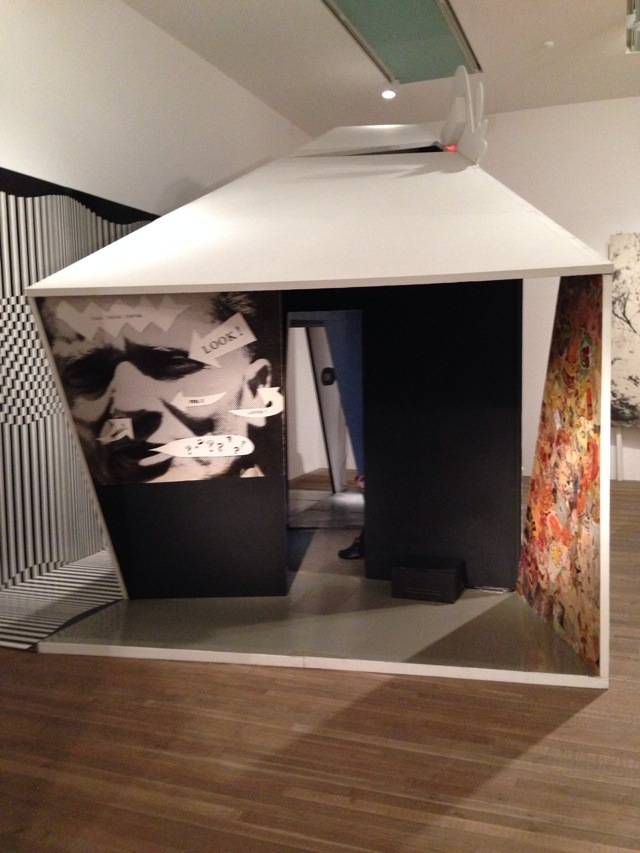
I can highly recommend the new Richard Hamilton exhibition at the Tate, although I have to admit I didn't know who he was before I went on Valentine's weekend. I did recognise a few of his works, and that was the joy. For example, he produced what is generally regarded in the art world as the first ever Pop Art piece to achieve iconic status, his 1956 collage: "Just what is it that makes today's home so different, so appealing?" Why isn't this man more famous! 

If you like your art entertaining, stimulating and thought-provoking in equal measure like I do, you'll love this exhibition. It's multimedia, colourful and really very exciting. It's on until May. Do make time to go!

Monday, 10 February 2014

Gemma Lindfield


Gemma Lindfield has a lot to say about media warping of extradition issues and Government interference. We chatted as we travelled to and from Sky News' studios at Millbank when she was invited in as an expert talking head on the Boulton & Co show, taking part in a live studio discussion on the Italian Amanda Knox verdict and whether US authorities would be likely to honour an Italian extradition request. While we were waiting in the "green room", (actually a small sofa in their reception), the story of the Dewani extradition broke, so Gemma was neatly on hand to answer questions about that at the same time.

Gemma is an extradition expert at 7 Bedford Row.  Publicly she is perhaps most famous for representing the Swedish authorities on the Julian Assange case, and other high-profile cases, such as her current involvement in a Rwandan extradition request for 5 men accused of genocide and crimes against humanity. Professionally, she is best known for her work acting for judicial authorities, governments AND defendants in extradition proceedings, and the near-unique 360 degree view this gives her of the issues that can arise from any angle. She has worked on some of the most legally and politically complex cases to date.  There are few people in town who can beat her expertise in this area, so no wonder Sky have been keen for a while to have her as a guest.

The point she talked to me about with such passion as we travelled to the studio and back is how media reporting of unusual, high-profile extradition stories can skew public perceptions of the issues, with politicians then stepping in to quell their fears and start posturing… on issues that just aren’t that relevant.

"Theresa May's recent "intervention", [her eleventh-hour amendment to Immigration Bill to make it easier to deport foreign-born criminals] is a classic example. It comes on the back of the public's hostile reaction to difficulty the UK Government faced removing convicted terrorist Abu Qatada from our shores” [coined the “The Abu Qatada Problem”].  “This type of law reform is playing to the public gallery. But these high profile cases are exceptional and that's why they attract the media attention they do; by definition they are classic "man-bites-dog = interesting" stories, in contrast to the much more common run-of-the-mill "dog-bites-man" cases.  And of course the problem with changing the law as a knee-jerk reaction to a few freak, high-profile cases, is that it will be applied to the much larger number of cases going on below the radar that most people never get to hear anything about ...and this makes justice that much harder to achieve.  There's a reason our constitutional law places such great emphasis on the separation of powers, i.e. making sure our Executive (= political), Legislative and Judicial authorities are independent from one another to provide for natural checks and balances; it's dangerous when misinformed public opinion has unchecked power to direct new law.

"I remember the plight of a young mother I represented, wanted by Poland for possession of 5 grammes of amphetamine from her troubled teenage years. I came on board at the appeal stage and noticed when my client reached for a cup of tea that she had self-harm scars. Gently exploring the background to them revealed a very difficult childhood where drugs provided an escape. This young mother had turned her life around in the UK and there was a real risk that her son would be damaged by her extradition and that history may repeat itself. Near tragedy was averted, her extradition was scheduled for her son’s first birthday after a successful application to the European Court of Human Rights for what is called Rule 39 relief, an interim measure to prohibit extradition where the court feels there is a merited application that will be made.

"I do believe the European Court of Human Rights is an important check on government excess. And that it is also important legal aid is preserved and quality representation afforded by those who have a specialist knowledge of human rights. Surely this is something a fair and just society should provide."   

Other topics we covered in the taxi back from the studio ranged from social media, her passion for shark preservation (the irony is not lost on her) to shoes. I'm delighted to tell you that Gemma has joined the legal twitterati, her profile describing her as "barrister with sparkly shoes". You can see why I like this woman so much.
***
So almost 20 years after The English Patient, Ralph Fiennes and Kristin Scott Thomas reunite for another great love story: The Invisible Woman tells the tale of Charles Dickens' secret mistress.

Fiennes and Scott Thomas sizzled on screen for us in 1996. Is The Invisible Woman a return to their romantic form? Not quite: although Fiennes plays the part of lover with the usual reserved passion that sets his female fan base alight, and to critical acclaim I'm told, Scott Thomas' performance on the other hand has far less romantic conviction... because she is cast as Dickens' mistress' mother! Tells you all you need to know about the difference between the casting possibilities for men and women past the age of 50. And Scott Thomas has not been shy to speak out on the topic. Read here ....

***
Amongst the saddest news this week was the untimely death of award-winning actor Philip Seymour Hoffman, lost to a drugs overdose at just 46. The man who shone in roles such as Freddie in The Talented Mr RipleyBrandt in The Big Lebowski and the very chilling Lancaster Dodd in The Masterwill be remembered for both the depth and range of the characters he brought us. And since watching his Oscar-winning turn as Capote in the eponymous film, I can't help but conflate the two personas, the actor and the character. 

Philip Seymour Hoffman, we will miss you. 

Tuesday, 4 February 2014

Paul Cheston


There’s no doubt, Evening Standard court reporter Paul Cheston is one of journalism’s best story-tellers, keeping up readers’ interest in the Hacking trial as he reports from the court week in week out.  I just love how the opening line of each of his news piece gets right to the heart of the most tantalising aspect.  This is text-book story-telling at its best.

Look at these three openers just this week:

“A self-confessed phone hacker today told the Old Bailey how he was hired by editor Andy Coulson over a hotel breakfast of scrambled eggs and smoked salmon.”

Jude Law tells phone hacking trial of row with Daniel Craig over Sienna Miller affair…”

“A News of the World reporter signed a sworn statement claiming that he did not intend to hack interior designer Kelly Hoppen’s mobile phone but had misdialed because of "sticky keys"…

And on other cases this week….
“A top investment banker and her stay-at-home husband are locked in an £11 million divorce battle following an argument on a family holiday…”


“Readers always like something new, so I’m conscious they will get bored and not bother with long running cases unless coverage is presented in a fresh way. The Phone Hacking trial is particularly long and drawn out, timetabled for at least six months, while most other trials can be measured in days or weeks. And reporting restrictions are exceptionally tight on this case, so there’s no room for digressing into any interesting themes or issues raised beyond what is exactly said in front of the jury.  The key to writing a different story each day is to find – hopefully - the bit that will catch the readers’ eye and presenting it in a punchy, interesting way.”

Paul is famous among court reporters for being the most experienced in the field.  He’s been working this beat for some 21 years and there’s no-one better.  Because of the Standard’s early press deadlines, he’s renowned for composing his stories in his head and then dictating them straight over the phone, rather than writing them down.  That’s some story-telling skill. 

We’ve worked with Paul on a number of training assignments: media training for clients and good PR practice around court cases for our staff.  And “story” is always at the centre of what he teaches.  “Focus on what people really want to read about.  Take a look at your story and test it: Would you be interested if you read that in the paper?  Have you the key angles upfront? Money always talks, so if there’s a big sum involved, highlight it.  Celebrity sells to Times readers as well as Sun readers. So too sex and football.  The Evening Standard prides itself on its commitment to the arts but if there was a big-money court fight involving a kiss-and-tell between a footballer and a TV star, I would be expected to push women and children out of the way to get to it.”

Paul must have worked on thousands of cases in his time, across all the London and surrounding courts, the Old Bailey, Rolls Building, Royal Courts of Justice, Southwark, Blackfriars, Snaresbrook and most of the crown courts in England, Wales as well as various trials abroad. Consequently there’s no-one who understands reporting rules and contempt of court laws in practice better than him.  He’s also produced a book together with famed court artist Priscilla Coleman Court Scenes: The Court Art of Priscilla Coleman.  But best of all, you can read him in the Evening Standard almost every day.
***
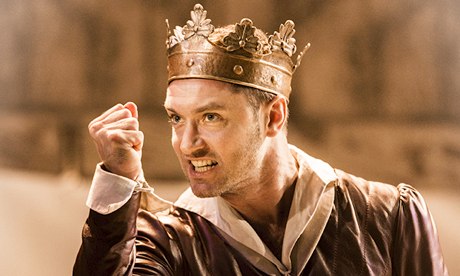
And the day Jude Law made his appearance in court happened to be the same date @Adele_Kysen had booked to see him in Henry V at the Noel Coward Theatre (just around the corner from our office). How would he recover from the clear emotional trauma of the day? Would the discovery of his relative's mercenary betrayal put him of his stride? I'm pleased to say, the following morning Adele reported his performance was flawless. 

I saw him in this role myself at Christmas and he really is fantastic. One of those rare actors who can make Shakespearian sound like easy, colloquial English. He really stood out. He deserves his celebrity. Go Jude! You have fans here!
***
Remember "Pre-Crime"? Well apparently it's coming to London soon. Minority Report is one of my all time favourite films and it's central idea about using psychics to track down (and incarcerate) criminals before they commit a crime is an intriguing ethical point: if they've stopped before the crime is committed, how can they be criminals? What would this approach do to the presumption of innocence? 

Based on a Philip K Dick short story (as so many of my favourite Sci-Fi films are), the plot twists on a "minority report" by one of three psychics that casts doubt on the judgment of one character's future crime. The Standard's Martin Bentham tells us that soon a new Met computer system will be used to predict where offenders will strike next, starting with a 3,500 pool of gang members. In the Hollywood version things didn't end well for the authorities. Perhaps I should send a copy of the DVD to the Met...


Monday, 27 January 2014

Edward Fennell


What a rare pleasure to be watching a print journalist friend on a BBC TV programme, rather than a client: Edward Fennell and his campaign to find the remains of Alfred the Great, "The Alfred Project", featured on a Neil Oliver history special on BBC 2 this week... and of course I tuned in.

Although the BBC film comes in the wake of Channel 4's documentary about the discovery of Richard III's remains underneath a car park in Leicester – Hyde900, the community group in Winchester to which Edward belongs, has been investigating the possibility of testing bones from Hyde Abbey (where Alfred was buried in 1110) for the past four years.  

"Our search for Alfred began a long time before the publicity machine for Richard III cranked into gear," he tells me. "Indeed, some amateur historians in the Hyde area of Winchester have spent years poring over historic records. There was already a well-established local folk tradition that Alfred was buried in the "Unmarked Grave" in St. Bartholomew’s Church, Hyde which lies about 100 yards from where  Alfred had been officially buried. But until quite recently there was no way of testing out the truth of that claim scientifically. So, in the aftermath of our 2010 celebrations of the 900th anniversary of the arrival of the bones of the Royal House of Wessex in Hyde, we thought that the time had come to open the grave, see what was there and undertake the carbon dating testing. The crucial point was that, at that stage, we were under the impression that the only bones remaining from the Hyde Abbey site had been deposited in this grave. So it was not implausible that Alfred might be amongst them.”

The biggest challenge in the whole story was to secure permission from the Chancellor of the Diocese of Winchester to exhume the bones and analyse them. In fact, it took almost three years of patient legal work by another Hyde900 member, barrister Rose Burns of 4 BreamsBuildings Chambers, to persuade the Chancellor that under ecclesiastical law there were grounds for doing so. Rose features in The Times' Lawyer of the Week column this week in fact, for the cleverness of her legal arguments on behalf of The Alfred Project. 

"In March last year we were finally able to open the grave and the first sight of those bones was very emotional. Quite moving actually." This moment was captured on camera and you can see the reactions of the Winchester team in this documentary clip.

In the event the bones from the Unmarked Grave turned out not to be those of  Alfred and his family – their dates ranged from 1110-1450 – but, as in all historical research, one thing led to another and the Hyde900 team were delighted that their subsequent investigation (which would not have happened without the opening of the Unmarked Grave) produced a pelvic bone which osteo-archaeologists are convinced did belong either to  King Alfred or King Edward the Elder, his equally distinguished (but less-well known) son. 

Like me, most of you will know Edward as the award-winning City editor of The Times' Law section. He has written for The Times for well over two decades and I have known him for 25 years of that (although neither of us look old enough I know ... and I was a young slip of a thing when he was already an eminent journalist) We all love his coverage of business law and the legal world and his focus on the bigger City firms and the work they do in this particular part of the legal market; and we all enjoy his keen interest in legal business innovation, how he has tracked the advent of Alternative Business Structures and where legal market deregulation will take us. He is also famous for his In The City diary column in the paper each Thursday, biting and entertaining in equal measure, which is no doubt why it has such a phenomenal following amongst the legal community. He also takes on specialist copywriting mandates for solicitors firms and barristers including recently a history of Bird & Bird and Clarkslegal in Reading. Currently, he is working on a history of Quadrant Chambers in Fleet Street taking in both the site (going back to the 16th century) and the chambers itself.

As if his day job wasn't enough, in his spare time he is founder and trustee of Winchester's Hyde900, the community project dedicated to celebrating the 900th anniversary of the founding of Hyde Abbey, once the fulcrum of Alfred the Great's kingdom. The group is largely responsible for making happen the scientific research and legal petitioning that led to the exhumation of the bodies in the unmarked Grave for identification and authentication as the remains of members of the Royal House of Wessex.

How does he find the time? "It's something I feel passionately about. As a history graduate with a keen interest in the Anglo Saxons, I was amazed when we first bought our house in the Hyde area of Winchester in the 1980s and realised that I was actually living over the original cloisters of the abbey where Alfred the Great had been buried  but which had been pulled down in 1538. At that time there was little interest in the area’s unique history. In conjunction with various friends and neighbours we resolved to raise public awareness of what lay all around us – albeit buried underground. I very much believe communities thrive best when there is a shared appreciation and celebration of both place and people. At the heart of all these projects is the desire to unearth the rich heritage, talents and resources of the Hyde area and its people. Even so, we could not have guessed then quite how far it would take us.”  

I've always known Edward as one of the legal journalists most interested in legal futures. Fascinating to learn that he is equally passionate about the past. If you didn't catch the BBC documentary and Edward's stellar TV performance on Tuesday, you can catch up here
***
Anyone ever come across a "Director of First Impression" before? No, I didn't think so. Neither had I, until @theLegal500 tweeted this little gem from the Marketing Partner Forum this week.


Step forward Greenberg Traurig LLP, the first law firm to give a receptionist this fantastically wonderful job title as far as I'm aware - and I'm sure someone will soon tell me if I'm wrong...

Can I have this role please?
***
Another prize tweet from The Marketing Partner Forum: this wonderful diagram is courtesy of @DB_Legal, again via Twitter (don't you just love how social media can keep you in touch with live events happening thousands of miles away?), and it should be on every legal PR or marketeer's wall. Enjoy:


Tuesday, 21 January 2014

Richard Meade


Richard Meade is editor of the world's oldest business newspaper and it's just gone digital-only! Lloyd's List was founded in 1734 and is widely regarded as the definitive source for news analysis and data for the global shipping industry. I caught up with Richard at a meeting with our good friends at Holman Fenwick Willan this week and took the opportunity to quiz him about the move to digital-only, which media commentators are calling a landmark moment. 

"I became editor of Lloyd's List three years ago and everything I have been doing since then has been leading up to this moment: it was the main reason behind my appointment." Knowing how nostalgic some Lloyd's List readers are about the hard copy edition, and how some readers are quite baffled, even a little angry, it has been laid to rest, I asked Richard how they gauged the right time to make the move. "We are very close to our readers and track their habits meticulously. Over the last three years we have watched our online offering steadily grow and the print version wane. The tipping point came in June last year when our annual readership survey revealed that more than 97% prefer to access information online and that fewer than 2% read the print version at all."  Echoing FastFT editor Megan Murphy's sentiments (interviewed in this blog in June 2013), Richard explained how a digital platform allows them to do so much more and vastly improve on the value they give to readers: "Digital means readers can get news updates as stories break, wherever they are in the world and in whichever time zone. At its best, all the print edition could ever do was give you a fantastically accurate and insightful snapshot of what happened yesterday... in fact what happened two or three days ago, if you were a reader in Asia waiting for your hard copy to arrive!" 


As you'd expect from an editor of such an esteemed journal, Richard has a gift for words. I love how he puts across the point that people's news consumption habits are changing and so why the media is being challenged to evolve. "When Lloyd's List first appeared in 1734, it was a notice pinned to the wall of a coffee shop in London, a report for the merchants and financiers who backed them on the ships going in and out of harbour and the cargos they were carrying. Nowadays, its readers can sit in any coffee shop and have access to the "paper" through their smartphones and tablets." 


But it's not just real time information that's the big difference, he says: "It's also how we can tell stories in a digital medium. I was shocked myself to learn that our most read story of 2013 was not in fact a story at all, but an interactive infographic!"


Well, if ever there were a story to prove the digital revolution is real and our reading and media habits are never going to be the same, this is it! Don't just embrace the future, enjoy it!

***
So did you know the link between international commerce law giant Holman Fenwick Willan and iconic star of stage and screen Vivien Leigh? No? Neither did I until this week. I must have walked past that clock on HFW's ground floor a thousand times over the last six years but never knew it once belonged to this emblem of Hollywood's Golden Age and star of such timeless classics as Gone With the Wind and A Streetcar Named Desire. The story of how the clock got to be in HFW's offices is even more surprising: Viven's first husband was none other than barrister Leigh Holman, nephew of one of HFW's founding partners Frank Holman and closely involved in the firm's early work.  Vivien used his name to create her stage persona - before leaving him (and her clock) for Laurence Olivier. She remained close to Holman throughout her life however, which is perhaps why the clock ended up in his possession.  On digging in to this fascinating story, another incidental detail about the firm's history comes to light: that a junior assistant in its early Lime Street office was William Ernest Lawrence, elder brother of the novelist D.H. Lawrence.   

How did it take me so long to unearth these priceless jewels?! Never ones to brag, you won't find these gems on the History section of the HFW's website...
**
The fun with Google Glass is just beginning, lawyers told us this week, as a driver ticketed for wearing sci-fi spectacles was acquitted in a US court.  In this case the court couldn't tell for certain on the facts that the driver was actually wearing the glasses, which operated as a computerised recording device, hence the acquittal. So no principles set in stone.  The case is more significant in signalling that this new technology is opening up whole new areas of legal action. 

With built in monitors, cameras, microphones and with full internet connectivity, Google Glasses enable wearers to record, save and upload anything they can see or hear.  Other uses for Google Glass have been discussed elsewhere in the press, (not all of them appropriate to be described in a respectable blog), and lawyers have been poring over the legal possibilities and pitfalls.  According to the ABA Journal this new technology is "set to become a law suit magnet".  I bet lawyers everywhere are crying in to their beerglasses ;)