Friday, 17 July 2020

Ruth Napier


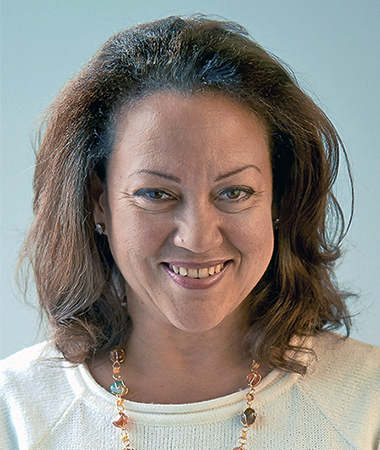
Profile photo of Ruth Napier

Cripps PG's Ruth Napier believes in a layered approach to marketing law firms.  With almost 20 years experience in legal marketing, and before that 15 years marketing big banks, what she doesn’t know about professional services marketing isn’t worth knowing.  When she agreed to share her wisdom on the subject of Return On Marketing Investment, I was all ears.

"The secret to getting the best returns is to focus your marketing effort on the areas that will give you the most value.”  I couldn’t agree more.  Now in an ideal world you shouldn’t need to spell this out, you may think.  But from my own 30 years in legal marketing and PR I am well aware that a good proportion of many legal marketing teams’ activity happens because senior partners or QCs ask them to jump and they respond by asking “How high?”  It takes a strong marketing professional to direct a firm’s or chambers’ marketing, rather than merely implementing the requests of the lawyers.  “Once you have identified those key areas, the next golden rule is to plan joined-up campaigns that organize, co-ordinate and synchronise layered streams of marketing activity around them,” she continues. “So you might be marketing fewer initiatives, but you are making sure that each is promoted thoroughly, and in a multi-faceted way.  So you will put together a programme that involves maybe a direct mailer to clients, a seminar, a page on the website and also press activity, all on the same topic area to really make an impact.”  This is the way to do it!  In my book, co-ordinating activity that puts partners and barristers into face-to-face conversations with existing/potential clients, with promotional initiatives that place the firm/set in the best possible light for the particular area of work in question at just the right moment, is the best way to deliver tangible results – i.e. new instructions.  And of course any marketeer who can demonstrate clear returns on marketing investment will earn respect and therefore have much more say as to how the organisation’s marketing is done going forward.  Not many are in such a privileged position as Ruth.  But she’s earned it.  What a refreshing change from the all-too-familiar picture of the massively overworked marketing team running breathless from one stand-alone marketing task to another: a seminar for the corporate team one week, then a press push for the real estate group the next, flipping their attention to a cocktail party for the private client department after that. 

“When I’m deciding what type of initiatives to include in my marketing mix for any one campaign, I have a picture in my mind of a marketing and business development “hopper”: you begin with activity targeted at audiences of hundreds of thousands, such as press work where your messages will be reaching vast numbers of people you can never hope to meet; mixed together with initiatives that reach thousands, such as a conference; then hundreds, such as events hosted by your own firm; then finally when you are talking about one-to-one conversations between partners and prospects, (or with clients where you are hoping to get a new type of instruction), you are reaching people in their tens; and hopefully at this point individual clients (or new mandates from existing clients) start popping out the bottom of the funnel.   

And of course the flow from prospect to new piece of business may not be linear.  For example appearing in the press may become most critical at the point you are meeting clients and prospects face-to-face.  The key is to have a good spread of activity from each of these levels in the hopper, in your mix.”

I can count on one hand the legal marketeers who are as determined to show tangible new business results from their marketing programmes (and most of those I can count have been profiled in this blog). Far more often the claim is that it’s impossible to show a direct correlation.  But does she feel ROI is as important in these strange times we live in?  Is it even possible in this Lockdown-disrupted market?  "As we are in an uncharted period of global change, it might be tempting to throw ROI out of the window, but it's still an important part of understanding the impact of specific marketing activity.  However target-setting for a particular activity or campaign is being less informed by historic benchmarks of course, which makes the job of pinpointing ROI harder", she says.  That's a natural challenge that comes with doing business in "unprecedented" times, I guess!  It's clear Ruth thinks we shouldn't give up.  After all, when financial times get hard, ROI plays a critical part in justifying what marketing spend needs to continue. 

Let’s all be more ambitious! Ruth is proving it can be done – and that the more you can demonstrate results, the more autonomy you are given to run your firm’s/chambers’ marketing programme the way you think it should be run.

***

Finance's Return To The Office: Major Considerations For CFOs
So the entire legal profession appears to be planning its return to the office (or chambers).  Have you already started allowing people to return?  And are you phasing it in between September and the New Year?  Many people we speak to are busy making workplaces safe, to enable a safe return after the Summer for those who want to, (who feel starved of the social interaction that office life brings / are desperate for other reasons to escape home confinement!), but limiting numbers, with a view to encouraging more to return in the New Year.  But hardly anyone is planning a return to previous office working patterns, nor a complete switch to a remote-working model.  Many firms and chambers have been canvassing their people to gauge appetite for continued home-working post-Coronavirus and the overwhelming trend seems to be people requesting a hybrid, so the freedom to create a new pattern of home and office working in a mix that suits them individually.


What’s your experience?  We’d love to hear.  If you’d like to share, please use the Comment box below.

***

funny-face-masksWe heard this week that facemasks are not going to be made compulsory office-wear, but looking at some of the wonderfully creative designs popping up on the market, many of use may well choose to make them part of our new professional look.  Here is a selection of my faves….


Friday, 10 July 2020

Andrew Gilmore

Profile photo of Andrew Gilmore

Grosvenor Law's Andrew Gilmore believes working practices have changed forever because of the Lockdown experience, as remote and virtual hearings have become prevalent, but that in the area of criminal law sometimes face-to-face just can't be replaced. 

Andrew and I were speaking after he had helped Kysen with a media enquiry from the Express, requesting expert legal comment on an EastEnders crime storyline.  As you can imagine Kysen never likes to turn journalists away empty handed, so through a mutual friend and client Derrina Jebb from SA Law we were put in touch and Andrew prepared some insightful comments at breakneck speed. We were extremely grateful for his input (you can take a look at the full article here), so thank you Derrina for the introduction. (Readers, do bear us in mind if you are sat on your sofa watching a TV or film plotline that has a legal angle.  We have a little-black-book of TV journalist friends who love to hear how real legal life compares with the stories they are reviewing.)  Andrew knows the system pretty much better than anyone I know.  He began his career at the Serious Fraud Office before moving to East End criminal law firm JR Jones, followed by a 14 year stint at Janes Solicitors,  finishing up at Mayfair's best, Grosvenor Law, which specialises in complex cases for high net worth individuals, whether arising from business or personal life.  Not only was he super helpful with this press enquiry, but we also got talking about the justice system.  And when he opines, given his background and expertise, you really want to listen. 

We talked at length (over Zoom of course, as this is the way The Conversation has evolved in recent months 😉), about how everyone's Coronavirus-induced experience working remotely from home is the way forward and how it has expedited the courts' take-up of technology as well, most of which is a very positive experience. "However with criminal work you have to appreciate how stressful it is for an individual being defended from accusations in the context of the Criminal Justice System", Andrew explains. "It's so highly personal, and threatening, so when clients meet the lawyers defending them, it needs to happen in person. They want to know you're there for them and they will want to check out the cut of your jib, to see who it really is that they have on their side. Often the defendant will feel backed into a corner and that everyone is against them. And usually that first meeting with the lawyer(s) takes place at a police station, which is an intimidating environment for a defendant, so clients certainly don't want you attending by phone or video. They need your physical presence because in this distressed situation they will want an element of personal comfort and support, at a level that doesn't occur in the commercial law world. Criminal defence work is very much a trust based service industry."

There is a place for online hearings in the Criminal Justice System and for this reason Andrew has been very pleased to see how the use of technology has ramped up in the criminal courts.  "They bring tremendous efficiencies when it comes to smaller, preliminary hearings.  For these, online is perfect.  It's so much quicker, cuts down on travel time and cost, and is convenient all round: better for prisoners and  for the prison system, as it dispenses with the need to transport defendants between prison and court, so to this end it saves tax payers money. It's also been interesting to observe another benefit of running these smaller hearings online; there's far less space for people to talk when a hearing is conducted via a medium like Zoom. And when people do talk, what they say is to the point.  This all cuts out time that is usually wasted when hearings happen in person.  It also dispenses with the physical "faffing about" that happens in real life as people take their seats in a room, and the additional talk and chatter that happens at this point.  So in all, the whole process is slimmed down considerably.  However when the case gets to the full trial, the in-person element is critical. Yes, online can help speed up the system, but detachment is not good when it comes to a trial and is likely to be detrimental to defendants. Anyone accused of a crime will want to see their accusers face the full trial process."

When judging the fairness of the Criminal Justice System, empathy for defendants is generally in short supply.  But to my mind, one of the central tenets of justice and respect for human rights is what happens to an innocent person who is put through the system.  Do they emerge unscathed? Or is the process so frightening and stressful that they are left with lasting damage?  "Whilst efficiency in the system is important", Andrew continues, "we need to be wise as to when technology should take a back seat in the courtroom and understand when face-to-face shouldn't be substituted."

I was keen to ask Andrew about a point Head of 7BR Chambers Collingwood Thompson mentioned to me last week, that "judge-only" criminal trials are being suggested to deal with the backlog of cases resulting from the need to socially distance in the courtroom (meaning far fewer trials can take place a day). Collingwood gave me his view (which we placed in The Times, available to view here if you have a subscription), that judges are far more likely to convict than juries. "That is precisely why the profession has been up in arms about the suggestion", says Andrew.  Yes we need to deal with the backlog, but judge only trials are not the way."

***
In case you missed it, New Law Journal recently published a three-page feature detailing the results of a joint study with Kysen on how top legal marketing professionals measure Return On Marketing Investment.  You can access the full article here.  Measuring ROI is a thorny challenge for the professional services sector at the best of times.  And now even more so, as firms, chambers and other legal businesses scramble for position post-Lockdown, at a time when every single penny of the marketing budget has to count.  

Over the next few weeks on this blog we will be publishing in full the individual interviews summarised in this feature, to give you even greater insights. 

***
So we are gradually returning to pub culture and I have to say the British Public has never in history looked so coiffured, all at the same time.  By the end of next week, I imagine everyone in saloon and public bars up and down the country will be pumped and preened without exception.  Rare for everyone's haircut cycle to be so in sync.  Time for the great national selfie?

Friday, 14 February 2020

Victoria Ash


For the next few months, The Conversation will be focussing on the challenging topic of Return On Marketing Investment, as it applies to legal businesses. This is a study we have been doing jointly with New Law Journal. I have had a lot of fun gathering these words of wisdom from some of the best management and marketing thinkers in the field. I know you will find their insights as fascinating and informative as I have.  Enjoy! 


Victoria Ash

Victoria Ash believes that, often, a law firm can only assess Return On Marketing Investment over the mid-to long-term, maybe 12-24 months. As a partner in RCR, a firm that specialises in helping boutique and specialist law firms grow, she says she’s frequently observed that if the objective is about changing culture to secure a business’s long term future, then in some cases you could even be talking as much as five, 10 or even 15 years before you reach the desired result. “But you do need interim goals to keep everyone focussed and on track to meet those long-term goals.”

And it’s important to track not just “outcomes", but “source activities” as well, she says, “Because whilst you can’t directly control outcomes, you can control your source activity.  And it’s important to make sure you are selecting the right marketing initiatives to focus on and that you are executing them well.”

The starting point of any marketing and BD programme has to be clarifying what it is you are trying to achieve as a business and then setting outcomes-oriented goals to define what success looks like, she says. “This might be increased revenue, whether generally or through on-selling or up-selling to a specific client; or it might be enhanced client retention rates; or some other measure.  Now whilst financial returns can take time to become apparent, especially if there are long sales cycles, there are other things you can measure in the interim. So for example if the goal is to bring in new clients, whilst it’s important to decide on longer-term measures that will tell you when your goal is reached, in the meantime you can set interim goals to track e.g. the number of pitches you do; meetings with new clients; number of follow-ups, etc. Another helpful interim measure might be “levels of engagement” with your marketing, which is much easier to ascertain in this social media age than previously.” 

Whilst these disciplines are the norm in most sectors, in the legal industry they are sadly actually quite rare, Victoria points out.  Far more usual is for in-house marketing and BD teams to be running around breathlessly “doing stuff”, but without much (if any) strategic or even tactical direction, she says.“We ran a survey a while ago to assess how much money firms wasted on ineffective marketing.  The answer?  A shocking £60m!”

Victoria also agrees with Serle Court’s John Petrie who commented in this blog last year that the success of marketing programmes has to be judged holistically, rather than measuring individual initiatives in isolation. “Everything should work together in an integrated way.  For example a heightened press profile and social media presence will help your lawyers’ conversations with prospects on the ground at conferences and seminars.”  I love the cycling analogy Victoria uses: “If you want to get better at cycling, it’s not just about buying a bike.  It’s about getting fit and doing training to learn techniques. It’s the whole programme that gets results, not just one activity.” 

On your marks, get set, go!


Friday, 27 September 2019

Catherine Baksi and Jessica Learmond - Criqui


Didn't you just love Catherine Baksi's Sky interview on the Supreme Court prorogation judgment this week? This award-winning legal journalist, (regular contributor to The Times, The Telegraph, The Guardian to name just a few of the top titles she regularly writes for), has been a regular on Sky News over the last couple of weeks, dissecting the issues in the prorogation drama and especially this week's shock Supreme Court judgment that our Prime Minister broke the law in suspending parliament. She has succeeded in explaining to viewers some very complex legal issues in terms beautifully concise, clear as crystal, perfectly delivered in a cut glass British accent - whilst sitting in the hot seat dressed in a leather bomber jacket. Choice quote: "I'm reminded of that song from The Clash - I Fought The Law and The Law Won". Don't you just love her style!

We first introduced Catherine to the Sky team a couple of years ago when they approached us for help finding a female Joshua Rozenberg, (you should take this as a compliment Joshua!). If this last two weeks is anything to go by, they have certainly found her. :)  You're welcome!

**

Image result for Jessica Learmond-Criqui
Employment law guru Jessica Learmond-Criqui never disappoints. One of Kysen's first ever clients in 1999 (when she worked in Big Law, before setting up her own boutique Learmond Criqui Sokel), she always stretched us with her original twist and unusual take on legal topics. 

Back then she got everybody's attention with the concept of "love contracts": HR professionals can manage potential fallout from workplace romances by getting both parties to sign legal documents saying the relationship is consensual.  This can flush out any issues of "imbalance of workplace power" in office romances that may need to be managed (even more relevant now in the post-Harvey-Weinstein age) and also avoid problems where perfectly balanced relationships end sourly. 

She has taken up her pen again for the press recently and gave us this gem for The Times - "Facebook users should be classed as workers and paid" (£).  Here's how the argument goes: given they make money from our data, we are all effectively their data-inputters when we're active on the site. And they haven't been paying us, so they owe us our money in arrears.  She even calculated how much they owe: " if 42 million users claimed an aggregate of £853.84 over two years, that would mean a very large bill for Facebook", she says.

Jessica! We've missed you! Glad you're back!

***

Image result for gc summit 2019Talking to General Counsel and other in-house lawyers face-to-face, I can tell you for sure just how important the legal trade press is to them.  For years I’ve been impressing on our law firm clients that the leading legal titles don’t just reach private practice lawyers, but a large community of in-house lawyers as well – and of course these are often the people in large corporates who choose which law firms to instruct.  Our PR programmes focus heavily on national and broadcast media, (The Times, FT, BBC, etc) and the leading sector trade titles (Estates Gazette and Property Week for the property sector, Retail Week for the retail sector, Spear’s for private clients etc etc and so on and so forth).  But we almost always include a strong thread of legal trade press in the mix, depending on the target audiences for our campaigns.Very often lawyers will challenge us, saying: “Why do we want to be in the legal press? We don’t want to talk to our competitors! Where’s the value in telling our story only to other firms?” But this misunderstands the audiences of the top legal press.  Yes they are read avidly by law firm partners, fee-earners and staff (and our barrister clients love them for this, as private practice solicitors are primary work-givers to the bar).  But a good 30-40% of the readership will actually be lawyers in in-house legal departments.  Each of the main legal trade titles has invested hugely in developing this part of their audience and their knowledge and contacts go deep.

Earlier this year I was lucky enough to spend three days on a residential GC strategy conference in Spain in the company of about 50 or so top-ranking in-house lawyers, thanks to The Lawyer who were hosting the event and a US client of ours UnitedLex who were headline sponsors. They specialise in large-scale business transformation projects for the in-house legal teams of big corporates, and have recently come over from the States, taking the European legal market by storm. I made the most of this golden opportunity - of course, I hope you’d expect nothing less of me! - to find out what really makes in-house lawyers tick, what their pressure points are and what keeps them awake at night.  Here’s what they had to tell me.

A recurring theme was ‘commoditisation and disruption’. Brad Swann, Senior VP at Inmarsat, called these ‘the two major factors’ in business today. GCs have a challenging role advising their business on how the risk matrix changes as their organisations change structure and shape. Moreover, in-house legal departments themselves are being challenged to go through their own business transformations, perfecting how human lawyers, AI and other technology are deployed alongside one another, seamlessly and to best effect.

I had expected this to be a big theme for GCs, I have to say, especially as our client and event sponsor UnitedLex had helped to put the conference agenda together; we knew the delegates were interested in the large scale business transformation projects they had run for large corporate legal departments. What surprised me more, speaking to GCs, was the emphasis they placed on the people issues in their businesses. As one Europe GC put it, ‘our business involves the gathering of thousands of people in one place and, whilst we take security and health & safety very seriously indeed, there is always the prospect that something might go wrong – whether that is due to mechanical failure, human error or bad actors.’ When you put it like that, you can see exactly why a GC would have sleepless nights! Even more unexpected though, was the emphasis that almost all of them placed on the management of their legal teams. For example John Abramson of Travelers stressed to me the benefits to the wider business that stem from the stability in his legal team. Having a group of lawyers who’ve worked in their respective roles for a long time, so have a deep understanding of the business and its issues, and who are well practised (efficient, effective), at working together, is invaluable he says. So one of his biggest preoccupations is how to keep them engaged and enjoying their work, so they continue to stick around. And how best to manage the workflow to make the most of the team’s potential in delivering what’s needed for the business.  Others I spoke to agreed with this and talked to me about the positive difference a well managed team can make and the importance of giving this sufficient focus. They also spoke about being mindful of issues outside of work that can affect how an individual feels and performs in their role. 

It was such a privilege to be part of the UnitedLex team and get a hot ticket to this event, to be able to speak to these GCs direct.  I was extremely lucky to have these conversations in person and glean these insights face-to-face, but my point is that the leading legal trade titles are communing with this GC audience all the time and are exceptionally close to how these professionals live, work and breathe. They know what’s most important to them and they know intimately their likes and dislikes when it comes to selecting and working with private practice firms.  Don’t leave this element out of your marketing planning. It has huge value.


Sunday, 28 July 2019

The Ambassador


We’re at a champagne reception for in-house lawyers, and The Ambassador tells me (over a Ferrero Rocher of course 😉) how hard he works to promote his chosen law firm advisors to the rest of his business - and why. ‘I choose my law firm advisors very carefully, looking both for technical excellence and commercial astuteness, so once they’re on board I’m keen to recommend them actively to colleagues. That way I’m upping the quality of advice the business as a whole is getting. And it also consolidates their position on our supplier panel, which gives me security in my own supply. And if all this increases the workflow for the law firm concerned, well that’s a bonus for them, isn’t it?”

It was my good friend, legal marketing sage Liz Whitaker, who introduced me to The Ambassador on this evening and started the conversation about in-house lawyers’ attitudes to instructing private practice firms. I was fascinated to learn just how different people’s approaches are. For example, a colleague of The Ambassador came over to join the discussion, let’s call her The Assassin (you’ll see why, in a moment). She told us over canapés her very strong belief in the importance of holding herself at arm’s length from her external providers, to keep an objective view. She didn’t want to get into a close relationship and she didn’t want to take responsibility for anyone else’s relationship with them. Another in the same team was different again: a junior lawyer, nicknamed by colleagues the Eager Beaver, because he’s ambitious and rising up the ranks fast, talked openly about working his relationships with private practice lawyers to help skill himself up and get on.

Liz's observations on these different personas was interesting. She said it was perfect evidence of why a customised marketing approach is required for each person you’re dealing with. “If you’re looking for a good return on your marketing investment, the Golden Rules are: be sure that investment is in personal relationships. Forget the One Size Fits All Approach. Jettison marketing plans that focus on talking to thousands when it’s obvious your best opportunities lie with ten individuals, whom you already know by name.”

I’ve written before in this blog about Liz’s book The Power of Personal and I’m delighted to say it’s now out. The central premise of the book is about tailoring your marketing approach, taking time to get to know the personalities you are engaging with and adjusting your tactics accordingly.

My favourite chapter is the one on The Characters, which is in truth where I really met The Ambassador, The Assassin and The Eager Beaver. Its entertaining to spot the ones you recognise from real life!

Liz organises these character types across a Royalty–Loyalty matrix which is enormous fun to work through: she pinpoints characters with both High Royalty (importance) and High Loyalty, such as our Ambassador friend; those with High Royalty but Low Loyalty, eg our Assassin; and those with rising Royalty and fierce Loyalty such as our Eager Beaver who we’ve met already. These persona types are just three of many. If I’ve whetted your appetite, you must read the book! (click here!)

What I love about Liz’s writing is how she uses humour to get her readers focussed on the right issues: honing in on the handful of personalities we need to manage for business success. And how she’s developed a ‘manual’ for handling them all; each character she describes comes with a helpful guide as to “how to spot them”, what your “mission” and “game plan” should be with each, and also some handy “health warnings”.

This book should certainly be required reading for anyone studying the Professional Services CIM course, (can we campaign to get this on the syllabus please?) and it should also form part of the induction for anyone stepping into a professional services marketing role for the first time.
***
Image result for first 100 yearsI have been enjoying the First100 Years project’s monthly “centenary countdown” parties since the start of this year, 2019 marking the 100th anniversary of the first women lawyers being accepted into the profession.  I have mentioned in this blog before that each party celebrates a particular decade of achievements and milestones of women in law. 
This month, the event was hosted by White & Case and we were treated to the video history of one of the firm’s partners Jacquelyn MacLennan, as part of the Project’s series celebrating extraordinary women in law. Jacquelyn acted on the 2018 ECJ case that established same sex marriages must be recognised across the EU, regardless of whether gay marriage itself is allowed in that country.  A brilliant example of women lawyers bringing in significant and important change. Why were they ever refused entry to the club? 
The film was created by a very talented team including award-winning documentary maker Angela Holdsworth who’s been profiled in this blog before.
***
Image result for women in lawIt’s also been fascinating to compare our own experience of women in law with the story of our US cousins, who this year celebrate 150 years since being allowed entry. 
I’ve had the pleasure recently of working with AmLaw’s Corporate Counsel editor Heather Nevitt, who runs a series of excellent and inspiring initiatives across the pond, celebrating exceptional women in the profession: most notably  AmLaw's "Women, Influence & Power in Law (WIPL) Awards" and also a women’s networking group that’s coming to London this Autumn (you heard it hear first!).
I had to put the women behind these two parallel sets of initiatives in touch, so had great pleasure in introducing Heather to First 100 Years founder Dana Denis Smith. Now just watch this space...! 

Friday, 24 May 2019

John Petrie

John Petrie

Serle Court CEO John Petrie believes measurement of Return On Marketing Investment needs to be approached in a holistic way and over the long term. 

I was talking to John over lunch at The Law Society's 113 restaurant (if you've never tried this establishment you really must!) for the first in a new series of investigations into how legal managers and marketing folk measure the success of their programmes. As a sequel to last year's joint study with New Law Journal on the impacts of the social media mix, this year we are working together again to explore the topic of ROI. As before, we are devoting the first few months of our study to a series of in-depth, one-to-one interviews, some of which we will publish in this blog. From this we will draw out some common themes which we’ll test at the end of the summer with a statistical survey of NLJ's readers. The final report will appear in the pages of the NLJ at the end of the year.

“When the barristers ask me 'what did we get from this or that event?" John says, “I'll politely respond that I don't think it is the right question. Yes, we have many circumstances where one of our barristers will get a new instruction on a big case just by sitting next to someone at an event dinner, but that's just a bonus and it doesn't mean anyone else will have the same luck. Far more important is the role that event plays in our growth of instructions across the board over a concerted period. At Serle Court, we have a number of long term initiatives aimed at developing instructions from new jurisdictions and increasing work in existing jurisdictions. So we need to look at all the marketing we do in the context of our broader brand building in that region, so how the combined effort of profile-raising and establishing a regular presence on the ground, through events, face-to-face meetings, PR, social, is effective in positioning our set for the right type and level of work. 

"Success of a marketing programme needs to be judged by how the different elements all work together to build recognition in our name and increase opportunities for face-to-face conversations, to capitalise on that increased profile and turn interest in what we do into concrete instructions. So it follows that return on that marketing investment in a specific jurisdiction is not to be judged one event at a time, but rather seeing how the pattern of instructions in the region changes in the medium and then the longer term."

So holistic is the holy grail. Wise words. Thanks John. 

If you have strong views on this subject or interesting insights to share, then do please volunteer to take part in this study. You can send me your contact details, with a brief note if you like, using the comment box below.
Image result for VR
***
Did you get to see Anthony  Gormley's "Lunatick" exhibition while it was still in town? I managed to snare a couple of the very last tickets so my good friend Helen Obi and I were able to go. I can honestly say it was out of this world. Literally! We donned our VR headsets and found ourselves on a beach modelled on a Pacific island  before being lifted up into the sky past the clouds and into space, then landing on the surface of the moon. Gormley collaborated with space scientist Dr Priyamvada Natarajan to use actual NASA images from space and moon missions to create this amazing virtual space journey.

I’m starting to see VR tech popping up everywhere.  It’s definitely becoming mainstream. A new property makeover show recently started on BBC Two using VR to help homeowners choose which design to go for, and a new history programme on BBC One uses VR to uncover the hidden history of Italian city life. So how long before law firms and barristers start to use VR? One use could be to offer VR recordings of seminars and conferences for clients who miss out on the day. 

If you haven't had a chance to try out this new medium, do find an opportunity as soon as you can. It’s coming our way!
***

Image result for Ben ShapiroThere’s never been a more pointed lesson on the importance of preparing properly for media interviews  than Ben Shapiro's disastrous-hilarious interview with Andrew Neil. The US conservative political commentator ended up storming off the set, the interview went so badly - and entirely the fault of Team Shapiro. He’d clearly been briefed to expect an easy ride, indeed even an opportunity for a PR moment. But his cry of "[this] is a way for you to make a quick buck on the BBC off the fact I'm popular and no one has ever heard of you" baffled viewers as for them, Mr Neil is one of the most recognisable faces in UK news. More puzzlement was to come when Shapiro accused the famously right wing journalist of having a left wing agenda. Oh dear. If you didn’t catch the interview at the time you can watch it here. But it comes with a health warning: this clip may cause serious toe-curling.

Monday, 12 November 2018

Angela Holdsworth


Image result for angela holdsworthSitting at Spark21's 2018 conference celebrating the First100 Years of Women In Law, the phrase "Out of the Dolls House and Into the Fire" comes to mind. Partly because the conference is featuring a series of video histories of women in law produced by Angela Holdsworth, the documentary maker famous for her seminal 1980s mini-series “Out of the Doll's House”; partly because one of the main guest speakers is Dany Cotton, the first female commissioner of the London Fire Brigade; but mostly because so many stories I'm hearing at this conference have a common theme: women break through barriers to take on top jobs, to then find their challenge has only just begun. 

I'm a big fan of this First 100 Years project and the way its organisers weave together varied and intricate layers of communication to get their message across. The video histories that Angela and her team are creating are a prime example: rather than polemic, these are highly personal, and therefore relatable, stories. These are a sure-fire way to engage audiences and a rich complement to the conferences, blogs, press pieces and social media activity Spark21 is famous for. 

Another fresh approach they are taking to ensure everyone in the profession is aware 2019 marks the 100th anniversary of the first women appointed as solicitors, (and those of you who know me well will clock straight away why I love this idea), is to run a series of 12 parties, one a month throughout the entirety of next year. Each party will celebrate one decade of achievements and milestones of women in law. Now that's what I call dedicated partying!

I was curious to know how Angela first became involved with Spark21 and the First 100 Years project. Catching up over coffee and cake at the Law Society she told me: "We found each other on Twitter, just because we were often sharing similar content. Isn't that great? To make a connection on the basis of the commonality of themes and topics and issues you're interested in? So we began our conversation on Twitter and then transitioned to the real world” and it wasn’t long before Spark21 founder Dana Denis-Smith was asking Angela to take on the role of executive producer for a new stream of video content for the project.

"The plan is to capture stories of women's firsts in law, or of women who have succeeded against the odds, and women who have used law as a stepping stone into another Sphere, such as Major General Susan Ridge, the army's Director General of Legal Services. There's a Finders Committee who decide together who should be profiled. Some choices are obvious, such as Brenda Hale as the first woman President of the UK Supreme Court. Others less well known, such as Khatun Sapnarathe first woman of Bangladeshi origin to be a High Court Judge."

So who else can we look forward to learning about via these video stories?
-Dame Fiona Woolf, previously Law Society President 2006-2007 and Lord Mayer of London 2013-2014 (amongst other significant City of London positions she's held),
-Funke Abimole MBE, multi-award-winning lawyer and business leader who at the start of her legal career had to make 120 calls to secure a training contract (then "articles"). She talks of turning up to one of her first interviews for a legal job only to be told at the door "Sorry, we're not looking for secretaries",  
-Elizabeth Butler-Sloss, the first female Lord Justice of Appeal,
-Dorothy Livingston, first female partner at Herbert Smith Freehills,
-and of course celebrity barrister, broadcaster and Labour Peer, Baroness Helena Kennedy
...to name just a few.
As regular readers of this blog will know, one of my recurring themes is clever use of the visual media to tell a story. So face-to-face with Angela I had a golden opportunity to learn from one of broadcast's best. I wanted to know how she approaches a video story differently from one in print. "You're always looking for what I call the Telling Shot, the one visual that sums up the entire story." I was enthralled as she described a classic telling shot she set up in another of her seminal TV documentaries, "Now The War is Over", chronicling how life changed in Britain from 1945 to 1951. In close-up, her interview subject reminisced about the pre-fab she once loved, sat in her living room looking wistfully out of the window. Then the telling shot: with the audience assuming she was looking out onto a street, the camera pulled away from her and out of the building to reveal she was on the 40th floor of a high-rise. A brilliant encapsulation of how housing policy had changed, how this impacted people’s lives and how they felt about it. All in one single, but cleverly conceived, camera shot.

Do make sure to catch Angela’s video histories as they are released by Spark21. You can follow them on Twitter here to make sure you don’t miss out.
The First 100 Years project aims to Celebrate, Inform and Inspire. The organisers are certainly ticking each of these boxes: we can celebrate at the monthly parties; inform and be informed at the conferences; and be inspired by the video histories. Roll on 2019!
All the work on the project relies on volunteers and donations. If you’d like to give your support, you can make a donation here, or contact the team here to offer your time.  
Copies of BBC’s Out of the Doll's House are hard to get hold of now but you can easily order the book linked to the series here.
***
Of the many stories that London Fire Chief Dany shared with us, the one that set the room alight, sparking a moment of levity, was the tale of her efforts to get the makers of Fireman Sam to change his job title. She told of the storm she created inadvertently last year, by calling for a change to “Firefighter Sam” as part of a campaign to encourage more women into the Fire Brigade. "For the past 30 years, no one’s had the job title Fireman", she explained. Everyone’s a firefighter. “There’s only one Fireman in the country, and he’s a cartoon called Sam!” The outdated language in the TV cartoon puts young girls and women off from considering firefighting as a career, she says, and they miss out on what could be a very rewarding profession for them.

Dany strongly believes in fighting for equality, allowing both boys and girls to follow whatever career path they want and not be restricted by gender archetypes and prejudices. She used the occasion of Fireman Sam’s 30th birthday to call for the change, as it coincided with her thirtieth year as a firefighter and she thought it was about time. A cute move I thought, although she did experience a strong social media backlash (or should I say backdraft?) However it was worth it to make the point. Nicely (and bravely) done Dany. Thank you.
***
Last call to take part in our social media study. As you know, we are currently running a survey together with New Law Journalexploring how social media is shaking up the legal marketing mix. The research period is about to close, so if you haven’t had a chance yet to give us your thoughts on the matter, please click here to answer our 3-minute questionnaire. Your views will make our final study report all the richer and we are keen to capture them.

The results will be published in New Law Journal at the end of the year, together with a selection of in-depth one-to-one interviews exploring some of the recurring themes in a bit more depth.