Wednesday, 6 January 2016

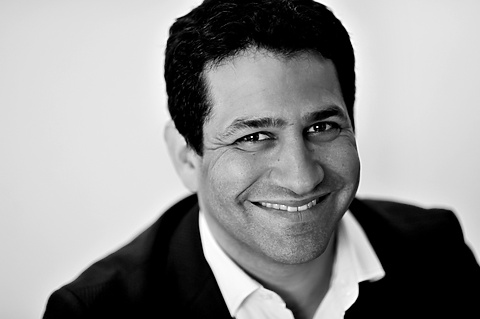
Timothy Hill


The Law Society’s Timothy Hill wants to stop preaching to the converted. The people most keen to sign up to the conferences, lectures, seminars he organises on protecting firms from cyber-crime, are by definition usually the ones who need it least: delegates will always be those who recognise the risk already; he wants to reach those who don’t. 

Tim is the Law Society’s Technology Policy Adviser, responsible for helping to support the Society’s members tackle cyber security and cyber-crime. Solicitors, amongst other professionals, are prime targets for cyber hackers because, aside from the obvious attraction to criminals of the client monies they hold, they are repositories for clients’ intellectual property and other commercially sensitive (for which read valuable) information. Moreover, sorry to break the news guys, but law firms are often seen as the “weak link” in the information chain according to some cyber risk experts.  

We met at a Cyber Risk round table discussion hosted by Weightmans EC3 team. The event was chaired by BBC business correspondent Joe Lynam, the man who broke the story of solicitor and sole practitioner Karen Mackie’s plight at the hands of “vishing” fraudsters (she was tricked by an elaborate cyber scam into transferring some 750,000 pounds of client money to the criminals). She has since been declared bankrupt, struck off and faces losing her home. A salutary tale if ever there was one.   
“This is a massive issue for the profession. Hackers are circling law firms on a daily basis and it’s my job to make all solicitors aware, and provide them with the tools and guidance they need to protect themselves. Awareness of risk is still low. You may think this surprising, given how often cyber risk headlines legal press. But the more the topic is pushed in the media the more it can actually be counter-productive; I do think that the more scare mongering the statistics and stories, the more the reality of the risk is undermined. Yes there’s a very real threat and yes people experience losses. But it’s hard to convince people who’ve not experienced it themselves, nor witnessed anyone else’s in their own network experiencing it.”

But what should law firms do to protect themselves from this new category of threat? I was keen for Tim’s advice. “First and foremost, appoint someone with specific responsibility for cyber risk. This should be a senior person, although exactly who this is in terms of job role will of course vary from firm to firm. It could be a Managing Partner, or someone close to that level, who takes ultimate responsibility and promises oversight of the issue, but delegating to someone with greater specialist insight (and spare time).

Second, firms should have a written policy, even if just a brief one, to crystallise the thinking around these issues. I’d go so far as to say even a sole practitioner should have a policy. It’s in the writing of it, i.e identifying and articulating the issues, that firms will find the benefit. The new EU data protection regulations have just been confirmed, which will bring in a new duty around compulsory data breach notification. Drafting a policy will help firms think about what data they hold and how it moves through the firm/business. Once firms have pinned this down, it’s that much easier to think about the risks to that data, how to limit and/or manage certain risks… even accept some risks…..the point being that they would be doing this consciously.

Third, although this applies more to the larger firms, training is an important element in the mix. A good option might be to join the Cyber Security Information Sharing Partnership, a forum for government and industry to exchange information on cyber threats and vulnerabilities that was set up in 2013 by the Cabinet Office. The Law Society can sponsor firms to join. Membership is free. The Law Society has a veritable library of cyber security resources for law firms and I am keen to make sure everyone who needs to know, (not just want to know), knows they’re available. See here for a comprehensive list. Highlights include:

·        Law Society Consulting: Nick Podd, who has over 20 years experience in both physical and data security within the military, as well as in industry and The Law Society.

·         Data Protection: Advice on protecting personal data in online services: learning from the mistakes of others.

·         Encryption to Protect Data: Information Commissioner’s guidance.          


Firms would also be well advised to check out the government backed Cyber Essentials scheme, designed to guide businesses in protecting themselves against cyber threat and providing free-to-download documents that can use as guidance to implement essential security controls
Fourth, firms shouldn’t forget the human factor; the tightest, most encrypted IT routines will not help you if your cyber-criminal is actually a staff member who hasn’t been vetted properly in the recruitment process, and is now supplementing their salary by the sale of confidential data on the black market."

So if your firm has so far only half-heartedly taken on board that cyber threats are real, make it a New Year’s Resolution to dig into these resources and put some proper protections in place.

Thanks for the wake-up call Tim!    


***
Encouraging news to start the year with, that the British Government is finally going to do something about the parallel Sharia court system that undermines British women's rights to justice. Thanks to The Times' The Brief  for bringing the story to me. The Government is taking action at last because it is concerned that Sharia courts in the UK are effectively creating a parallel system of (in)justice, with women discriminated against in particular. Undercover TV documentaries have shown that some women seeking divorce from violent husbands through the Sharia courts are unaware of their legal rights to leave the marriage. They are sometimes even pressurised to attend reconciliation sessions with their violent husbands present, despite injunctions from British courts in place to protect them from violence.

Congratulations to all the investigative journalists and campaigners who worked hard to raise this issue. The Inquiry will be set up in the next weeks and months.


Thursday, 24 December 2015

Elf The Musical


Looking forward to seeing Elf the Musical this Friday. The 2003 Jon Favreau film Elf is a family favourite in our house. We keep the DVD in our Christmas decorations box in the loft, and each year it comes out when we put up the Christmas tree and it gets multiple viewings over every festive season.  So imagine our excitement that there's now a stage musical!

If you haven't seen the film, do catch it this Christmas. It's one of the very best Christmas flicks of all time, regularly topping the Christmas charts. A beautifully heart-warming tale of an innocent in New York City, but not schmalzy. And it's one of those films that still looks perfect and fresh even after 50 viewings. We know this!

If you have seen it before, enjoy it again: "Call me elf one more time!"

Merry Christmas everyone!  Enjoy the festivities!

Wednesday, 25 November 2015

Jonathan Ames


When The Times announced that Jonathan Ames would be editing its new daily news shout "for all that's legal", alongside Frances Gibb, I knew The Brief was going to be a success. I can't think of anyone with a better blend of establishment (Sorry J, I know you'd prefer me not to say this, but it's true!) and maverick credentials. Jonathan has been a legal hack for almost as long as I can remember.  He was long time editor of The Law Society's Gazette; he has edited more than one overseas/international legal magazine, including a stint based in Dubai; he has been contributing to  The Times Law section on a Thursday for years; and he is equally famous for his recent role at the highly irrelevant Legal Cheek and his iconoclastic tweeting under the pseudonym @judgejohnhack. I knew his handling of The Brief, launched this September, would be informative, insightful and entertaining in equal measure. And in the two months since its first despatch, the evidence backs me up.

 "The Brief  is modelled on The Times' Red Box for political coverage which has been phenomenally successful," says Jonathan. "The powers-that-be wanted to replicate this success with the papers' legal readership."  The Brief delivers "the most important and influential news in the legal industry" to subscribers' inboxes by 8:15am Monday to Friday. So far in terms of topics, Jonathan has covered the need for more specialist judges in the new financial court; Supreme Court judges' pleas for better gender diversity in senior judicial ranks; the accepted culture amongst the Bar of making sexist jokes in court; Big Four accountants competing on law firms' patch, edging in to Top 50 Law Firm league tables; the legal profession's criticism of the UK's refugee policy; and confirmation from Lord Chancellor and Justice Minister Michael Gove that the (ceremonial) tights are his own!


I'm a particular fan of their daily Opinion column. It's one of the things that makes certain I open my Brief email before the working day kicks off. It's not like any other legal Opinion column I can think of.  It has so much more bite.  "We have very strict rules for the opinion column on The Brief", Jonathan tells me.  "We're very very particular about who we commission to express an opinion.  We only want true thought leaders of the profession, whether their authority comes from a particular role or job title", [so far Jonathan has interviewed shadow Lord Chancellor and Secretary of State for Justice Lord Falconer; Supreme Court President, Lord Neuberger; and Lord Chancellor and Justice Minister Michael Gove] "or they are influential for some other reason" [for example the inimitable Ronnie Fox].  "And more importantly, they need to be prepared to come right off the fence.  Both Frances and I feel strongly about this.  There are plenty of other opinion slots elsewhere in the legal media for people who want to give a "balanced, measured view", exploring all the different sides of a legal issue.  We want opinion with a bit of passion behind it, people who really want to make a point.  It makes for much more interesting reading."


Well I can attest that Jonathan is as good as his word on this: whenever I pitch an Opinion idea for The Brief, he'll always test me with "Are they  prepared to come right out and say what a disaster/travesty/injustice it is....?"


No wonder we all make time to read The Brief each morning.  Wouldn't feel right to start the working day without it!


If you have not yet had time to get round to subscribing to The Brief, you can sign up here. 
***
What on earth was Millionairess Kate Winslet thinking, stepping in to the Equal Pay debate and suggesting it's "vulgar" to discuss money, particularly salaries, in public?  Has she really lost touch with the fact that most women's working lives are rather different from hers, and that they live in a world where fair pay actually matters?   When you're discussing differences of a few million pounds in your earning compared to your male counterparts, perhaps the issue does feel more embarrassing than pressing.  But for the vast majority of working women, inequality has a rather more earthly consequence.   
Ms Winslet's comments came in the week this November that women stop earning until 2016, if you compare their salaries to men's.  


Now what I want to know is whether this androgynous photo shoot (see pic) for the current issue of L'Uomo Vogue is supposed to make up for her feminist faux pas.  What lesson are we supposed to take from this?  Are some [extremely wealthy] women better seen and not heard [on the subject of equal pay]?  I don't think so.  Far better that women in the public eye, who enjoy their role model celebrity status, think before they speak.  And talk sense.  Please Kate....
***
Did you catch the fabulous story of the judge who quoted Taylor Swift lyrics in a judgment dismissing a plagiarism case against the songstress? US District Judge Gail Standish wrote "At present, the Court is not saying [opponent] Braham will never, ever, ever get his case back in court.....But, for now, we have got problems and the Court is not sure Braham can solve them.  As currently drafted, the Complaint has a blank space—one that requires Braham to do more than write his name. And, upon consideration of the Court's explanation . . .Braham may discover that mere pleading Band-Aids will not fix the bullet holes in his case. At least for the moment, Defendants have shaken off this lawsuit.”

A bottle of wine for the first person who can name all the Taylor Swift songs referenced.  Answers in the comment section of this blog please.

We have our own creatives amongst the judiciary on this side of the pond of course.  Who remembers (who could forget!) Mr Justice Peter Smith's inspired judgment in the failed plagiarism case against Da Vinci Code author Dan Brown?  He inserted a code within the judgment, Dan Tench of Olswang was the first to spot it and crack it, and the story went viral all around the world in hours.

I've always said there's never a dull moment in law!

Monday, 9 November 2015

David Ramsden


BBC Children in Need CEO David Ramsden is hoping you are all going to dress up as your favourite childhood hero for his 2015 campaign later this month. The big BBC Children in Need Appeal show is airing on BBC1 on Friday the 13th of November. But the charity is accepting donations now.

The 2015 campaign theme was unveiled last month, with huge celebrity support: Tess Daley, Fearne Cotton, Nick Grimshaw, Sir Terry Wogan, Dermot O’Leary, Sophie Ellis-Bextor all donned fancy dress depicting their childhood heroes: Tess Daley chose Olivia Newton John; Fearne Cotton chose Blondie frontwoman Debbie Harry; Dermot O’Leary chose Arctic explorer andadventurer Sir Ernest Shackleton. You get the picture.

David tells me: "BBC Children in Need’s vision is that every child in the UK has a safe, happy and secure childhood and the chance to reach their potential, So we thought that portraying childhood heroes was a good way of underlining ideals and dreams that should be a big part of a normal growing up."

Children in Need supports some 2,500 projects around the UK that help young people facing a range of disadvantages such as poverty and deprivation; disability; or who have been victims of abuse or neglect.

I first met David at 11 Downing Street. That sounded so good, I’ll say that again: I first met David at 11 Downing Street celebrating an important anniversary of some mutual friends at Changing Faces, the charity that aims to change individuals’ experience of, and public attitude to, facial disfigurement. Changing Faces is one of the many charities that BBC Children in Need supports.

“Whatever you do", David says, "whether it’s a day spent dressed as your childhood hero, a bake sale at work or a ramble with your friends, it will help BBC Children in Need give children and young people in the UK the childhood they deserve.”

After our conversation, I start thinking in contrast about that troublesome theme Red Nose Day picked earlier this year: Make your Face Funny For Money. I’ll leave you to join the dots back to my interest in Changing Faces's work, to guess why I thought this campaign so ill-judged. All I'll say is how much more I appreciate the positivity and creativity of the Children In Need campaign in comparison.  Can I encourage all of us to take part in the fun on 13th November?

Who would you select as your childhood hero?  You can join in the Twitter chat here. 
 ***
There were no fireworks at Kysen this week, as we had to say goodbye to Honey

After almost nine years of dedicated, loyal service, Honey had not only became a central figure in the Kysen team, but part of the Kysen brand itself! And being the person she's sat next to for almost a decade, I can't actually imagine what life at work is going to feel like without her. I just know I'm going to miss her.

This week we welcomed Kysen newcomer Nicole Bailey, who steps in to Honey's old role and whom we're all enjoying getting to know.  She's made an excellent start. 

So business-wise I know this transition is going to be perfectly smooth. But personally... well that's another matter. In this sense, as a co-worker, supporter and friend, Honey can never be replaced.

Bonne chance Honey!  Come back to visit us!
 ***
We chose a Bond outing for our Kysen bonding session and farewell party for Honey. Almost enough to cheer us up.  Those of you who know me well will be well aware I am a film fanatic and Bond enthusiast.  And I always love to see what Bond on the silver screen reflects back to us about our society, as plot lines and themes in this franchise are always  a good measure of the Zeitgeist. Just consider that in Spectre the main story revolved around Big Data; that this was the first in the franchise to cast a beautiful 50-year-old Bond "girl" (let's hear it for Monica Belluci); and that there was a clear anti-violence thread to the plot line too, and you'll see what I mean.  And if gender equality and political correctness mean the title sequence now has to show as much of Daniel Craig's naked flesh as that of his female colleagues, well we'll just have to put up with that.

Wednesday, 14 October 2015

Ed Lewis


(Re)insurance specialist Ed Lewis is guiding us all through cyberspace. This forward-thinking lawyer in the EC3 team at Weightmans is working hard to raise awareness, particularly in the insurance industry, of how seismic the change is that the internet age is bringing, both in terms of how we do business and the legal issues and risks that surround it. Cars increasingly resemble digital devices (before you even mention driverless ones). Services businesses store pretty much their entire intellectual capital in cyber space these days. "The business world has silently slipped into cyber space over the last decade with most people still not really understanding the legal and risk consequences that arise from this" Ed says.

"In essence it's quite simple" he tells me. "It's about all the old familiar risks, just manifesting in new ways. The mistake is often made that "cyber risk" exists in a separate space from other insurable risks. But it is pervasive. The "cyber" revolution impacts every aspect of our business and personal lives."

I heard recently from a group of scientists and legal/ethics academics at John Flood's recent You, Robot! event at the University of Westminster (billed as an exploration of what it means to regulate artificial intelligence) that apparently we have become a different species since the internet revolution. (It must be true. A scientist told me.) That's how radical all this change is and how deep it goes.

I press Ed to tell me more about the implications for businesses and those that insure them, but he's keeping his powder dry. He is conducting a survey with Insurance Day just now, exploring the (re)insurance industry's comprehension of, and comfort around, Cyber Risk and results are due soon. He promises to tell me more as soon as the results are public. I'll hold him to it, don't you worry... and report back to all of you soon. 

A great initiative, Ed. Truly market leading.
***
A threat to national security will always diminish public concern for individual human rights. Should we really worry whether our authorities are squeaky clean in their detainment and interrogation of suspected terrorists? Surely different rules apply? And it's pointless, isn't it, to pussyfoot around the "innocent until proven guilty" principle, when we all know a short sharp interrogation with a bit of physical threat behind it can unearth vital information foiling terrorist plots and saving thousands of lives. Right? Thankfully Freedom From Torture is there to remind us that if we let individual human rights roll back at times like these, innocent people will suffer because brutal regimes know they can get away with it.

The charity took the occasion of their 30th anniversary to promote a campaign to stop "the backsliding of anti-torture legislation", pointing out the human rights abuses perpetrated by governments in the midst of the current refugee crisis as a classic example of how ordinary people suffer as a result. See their website for more information.

If this is a subject close to your heart you'll appreciate this magazine supplement produced by Amnesty, detailing the numerous different and complex aspects of the refugee crisis.
***
Cheering news this week that for 2016 the infamous Pirelli calendar will profile women of influence... and over more than just male pulse rates. And the women are all fully clothed too! 

This is revolution not evolution: even just last year, the photocall for this "artwork" famous for objectifying the female form was dominated by models scantily-clad... in latex! 

For 2016 the photographer is Annie Liebovitz and she has chosen to create a classic set of portraits... of women she believes have achieved something special. Serena Williams, Yoko Ono, Patti Smith all feature. A sign of changing times? I hope so.

Appropriate news in a week that Suffragette was chosen as the movie to open BFI's London Film Festival. Starring Carey Mulligan, Anne-Marie Duff, and Helena Bonham Carter with a cameo from Meryl Streep (as Emmeline Pankhurst)... who all joined me on the red carpet at the premier in Leicester Square. (Honest! Well, I was on the red carpet at the same time as them at least!) Just thought I'd mention that.

Tuesday, 22 September 2015

John Gould


I was proud to be a personal guest of John Gould at the launch of his new book "The Law of Legal Services" at the Royal Festival Hall. John is widely acknowledged as one of the country's leading regulatory lawyers, having acted in many cases establishing important legal precedents. He is described in the legal directories variously as "an important figure" on the regulatory scene, "very impressive", "intelligent and innovative" and having an "unsurpassed knowledge of regulatory powers". In person however, despite his formidable reputation he is an utter delight: eloquent, charming, approachable and funny, all in equal measure.

John has a particularly valuable perspective on legal services regulation, being both an advisor on the issue (his clients include solicitors and firms, more than 40 sets of barristers and all the main legal regulators) and manager of a legal business himself; John is Senior Partner of Russell-Cooke and has led the management team over the last 20 years in which time the firm has grown exponentially, in reputation as well as in real terms. Russell-Cooke is well known as “the solicitor's solicitors” (ie the advisors to whom the rest of the profession turns when needing advice) and John’s regulatory practice has been key to this.

So given his special insights into law firm business and regulation, I was keen to know his view of the challenges facing both regulator and regulated in the post Legal Services Act world. Does he think that the bodies governing in this very changed environment have a handle on just how differently legal business is being, and can be, done? And what does he make of the differences in approach across the numerous regulators attempting to safeguard good practice across the breadth of the profession?

"I advise anyone trying to understand legal business regulation that it is essential to focus on the underlying principles, as well as  the individual codes; and more on the commonalities between the regulators of the various sections of the legal profession, than the differences. The marketplace for legal services today is experiencing a faster rate of change, and seeing more business innovation than at any time previously, bringing new challenges in terms of the way these businesses are regulated. The trouble is the picture keeps changing and it can be hard for practitioners to keep up. Focussing on the principles of regulation will help practitioners keep track of the continual and multifarious changes to the various different codes that make the picture even more confusing, making it easier to keep up, both now and in the future."

Of course what would help practitioners most of all in keeping pace, would be buying John's new book! Praised by Supreme Court President Lord Neuberger in his foreword for being "authoritative, full and user-friendly", The Law of Legal Services is the first comprehensive, accessible single-volume guide designed for individual lawyers in all branches of the profession. It is published by Jordan, the UK's largest independent legal publisher, and includes contributions from solicitors Michael Stacey, formerly of the Ministry of Justice and the Legal Services Board, MichaelColledge and barrister Tom Bradford (all three being colleagues of John at Russell-Cooke), also Cilex Regulation board member and compliance consultant Andrew Donovan, formerly of the SRA.

"Our aim was to bring together in one volume the law which every lawyer needs to know, whatever their specialisations," says John. "The emphasis on principles and decided cases provides the legal context for the business and conduct issues which lawyers grapple with everyday."

Topics covered include lawyers' duties; negligence; regulation; indemnity insurance; the protection of goodwill; fees; and insolvency.

The book is available to buy here. Updates will be provided through an internet portal, (very 2015), which you can visit here.
***
Embedded image permalinkWe had tremendous fun at the Halsbury's Legal Awards this week, especially watching our very good friends at Brachers pick up the top prize as Law Firm of the Year. Knowing all the hard work that goes on behind the scenes at this leading Kent firm, we know just how well deserved a win this is! The firm works tirelessly for its clients, putting more and more emphasis on listening to their needs and honing their services and teams to suit them perfectly. And they invest so much in their internal comms and teamworking too, I've rarely seen a law firm pull together so well in servicing its clients and enjoying it so much. The buzz at the firm has been palpable over the last year, even before this win. Just imagine what it's like now! 

Congratulations!
***
Regular followers of this blog will know how excited I get about robots and AI. And right now I have invitations to not just one, but two events contemplating their impact on society. The RSA's "Rise of the Robots" event explores "how we manage the profound shift in our work as rapid technological change makes increasing numbers of jobs obsolete". Even more exciting for those of us in the legal community is John Flood's "You Robot!", which will look at what it means to regulate Artificial Intelligence, analysing the legal issues such as agency, liability and so forth, that will become increasingly contentious as our future unfolds. You can tweet @JohnAFlood here and ask for an invite. 

Monday, 3 August 2015

Elliot Moss

Elliot Moss, Director of Business Development


Mishcons’ Elliot Moss believes Action Leadership speaks louder than Thought Leadership. Chatting over coffee at the Holborn Dining Room (clearly his second office, the staff are so familiar and slick in how they usher guests to his table), I’m struck by his energy and his lack of fear for anything new. Indeed his hunger for it.

It was a passing comment he made at our previous chance meeting that had stopped me in my tracks and inspired me to coin the phrase “Action Leadership”. And that also prompted me to invite him to interview for The Conversation. We were swapping notes on our philosophies of professional services marketing, and as I described my own theory of how Thought Leadership needs to be truly leading, (otherwise surely it’s Thought Followership), he interrupted with a challenge to my premise that it had to be about Thought at all: “Isn’t it far better to DO stuff in the marketplace, and then talk about it afterwards?” I was curious to know more, so demanded examples. There are many. And they are impressive. For one, the firm curates a business programme on Jazz FM called Business Shapers, interviewing “shapers of the business world, people who, like the musicians on the station’s Jazz Shapers programme, have defied convention and gone on to achieve great success”. Elliot hosts and interview subjects have included Jo Malone, Cobra beer chairman Lord Bilimoria and Ann Summers CEO Jacqueline Gold, to name a few. And who in the legal world could forget the firm’s ground-breaking initiative with De Brett’s, the world’s authority on manners, working together to define the new etiquette for the modern world around divorce: De Brett’s and Mishcon’s Guide to Civilised Separation was published in 2012, so pre-dated by two years Gwyneth Paltrow and Chris Martin’s “conscious uncoupling”. Very ahead of the game.

This puts me in mind of one of the best ever descriptions of marketing I have ever come across, from legal entrepreneur (original founder of Rouse International) Peter Rouse: “marketing” is an action word, similar to “gardening”, he told me; "however attentively you read your gardening books, sitting with your cup of tea gazing out of the kitchen window, your garden will come to nothing unless and until that point where you actually step outside of your cosy house and go into the garden and start digging, actually getting some earth under your fingernails.”

I can list on one hand (OK, being realistic maybe two) the number of business development directors in the professional services world who have ever sold anything to anyone. Elliot is most definitely one. This is perhaps his own biggest Point of Difference and what sets him apart. He spent 15 years he at the top of the advertising industry, before he even entered the legal world, and at one point was responsible for half his agency’s revenue. He began at LeoBurnett, one of the most creatively awarded communications agencies in the UK, progressing from management trainee to Account Director in just his first four years, and his senior roles there including stints in Mumbai and Mexico as well as London. Not your typical background for a BD role in a law firm. He moved on to become MD of Leagas Delaney (clients included BBC and Nintendo), and while he was there was introduced to Mishcons. He was invited to give a talk to their Partners in 2007 on the subject of “brand” and famously pitched the whole session on why brand ISN’T important. You can see how good he is at getting people’s attention!

“I was making a serious point though”, he tells me. “In a people-oriented business, your brand is your service. Contrary to what many lawyers think, brand is not about the colours on your website. Your brand is your “promise” and the people in the business are the ones who convey it, not the website or your marketing literature. To put it simply, if your promise is that you “know the local area”, then any person in the business that a client deals with needs to embody that… and know local stuff!” Two years later in 2009, the firm asked him to join their staff.

Elliot and I talked at length about our experience of explaining some of the more subtle aspects of branding to professional services firms. I also often talk about brand as a promise, the strength of the brand depending on how well a client’s experience of the company matches up to that promise (or, in the case of a weak brand, doesn’t). So Elliot and I discovered we are very much on the same page.


“A brand is a summation of experiences and values. The trouble is though, that in the legal profession in particular, everyone pretty much says the same”, he says. “So your point of difference has to be about how you translate all of what you say into actions”. So THAT’S his point about the prioritising actions rather than words. “When I first crossed over to work in-house at the firm, in those early days I talked to them a lot about Why the What Isn’t Enough. I wanted to change their thinking and their insistence that What they did was the key, directing how they presented themselves to the outside world. Over time I convinced them that clients were far more interested in How law firms deliver their services.” Lawyers are notoriously mistrustful of such an approach, because it focusses on “soft” issues, which they see as by definition less important. So how do you convince a lawyer to look at something differently? By presenting evidence of course. “We used feedback from 150 clients in an Acritas survey to show to the lawyers what it really is that clients value. A common theme emerged, around clients appreciated how much our lawyers empathised with them, to a level beyond what they’d experienced elsewhere, and a sense that our guys were “in the fight with them”. One put it as strongly as “When I bleed, they bleed”. Words the lawyers couldn’t ignore … and it certainly showed that soft issues can sometimes be anything but soft!” So it was this process that led Mishcons to their wonderfully bold positioning statement: “It’s business. But it’s personal”, very cleverly describing in one pithy phrase both the What and the How … and the wit!... of the firm.

You can take the man out of advertising, but you can’t take the advertising out of the man. Nice job Elliot! It’s not just Mishcons that is lucky to have you, but the rest of the profession too. We like the standard you set.

***

It's been fascinating working on the story of Continental Elite law firm BonelliErede's rebranding. I've often spoken about the innate challenge for professional firms in understanding how "FMCG" concepts around branding apply to service-oriented (rather than product-oriented) businesses. And I'm also well aware that the professional services market in continental Europe has had far less time to get to grips with all this, compared to those of us on this side of the channel, simply because their professional practice rules have prohibited them from marketing and promotional activity until much more recently than their UK counterparts. (The deregulation that kick-started our evolution from dusty professional practices to slick legal businesses began as long ago as 1987.)  So imagine my surprise at BonellieErede's sophisticated approach to its rebrand: client and market-facing communications planned meticulously in advance and timed to coincide precisely with internal communications. Also the story of the rationale behind the brand overhaul was nuanced to speak to two very different audiences simultaneously: both domestic Italian and international. 

When you look at the pedigree of those in the marketing team responsible for the project, it's no wonder: between them they have backgrounds at FMCG giants Benetton and Canon Europe, and at international law firm behemoths DLA Piper and Simmons & Simmons, plus a Masters in International Affairs thrown into the mix.  They're the perfect team. Marco, Serena, Francesca, given you're impressing the sophisticated UK legal marketing community, just think of the waves you must be creating in your Italian home market. Nice job!

***
My excitement at the release of the new Terminator film, Genisys, just goes to show you're never too old to get carried away by the magic of the Silver Screen.  And for this latest iteration of the famous Sci-Fi franchise, don't you get the feeling that reality is starting to catch up? We've worked on so many topics around AI and the law recently at Kysen: issues around liability for accidents in driverless cars; the investigation into the killing of the German factory worker crushed by a robot; the venture capital house that made its key investment algorithm into a director of the company. The film is now going to have to work really hard to keep the "science" fiction. Makes me even more eager to see it!